
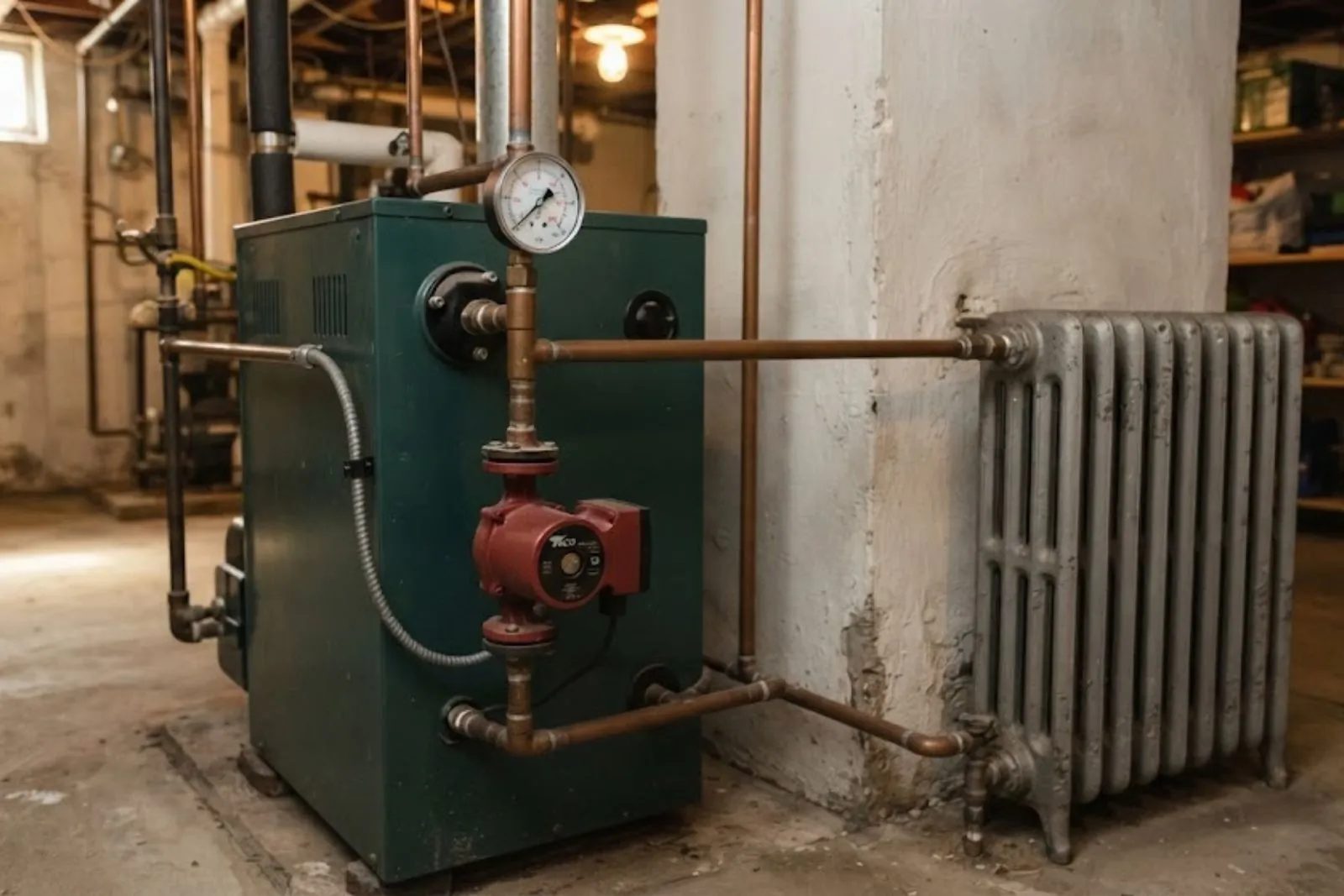
No heat from a boiler in a Minnesota winter
A dead boiler in January is not a comfort problem. Indoor temperatures drop quickly, pipes in outside walls can freeze, and a burst pipe follows. That is why people search for emergency boiler repair, and why we answer after-hours calls the same way we answer daytime ones.
Same-day appointments are available when the schedule allows. While you wait, keep interior doors open so warm air moves, open cabinet doors under sinks on exterior walls, and let a faucet drip on the coldest pipe run. Do not use an oven or a camp stove to heat the house.
Where a boiler job touches fuel gas piping, the City of Minnetonka permit form says a city license and state bond are required, so ask the building department which standards apply to your repair.
Gas smell or carbon monoxide alarm: an emergency at the boiler
A gas smell near the boiler, or a carbon monoxide alarm that sounds, is a life-safety event. Leave the house with everyone, including pets, and call 911 or the gas utility from outside. Do not reset the boiler or look for the source first.
Call us once the gas company or fire department has cleared the home. A boiler that produced carbon monoxide needs a licensed look at its venting and combustion before it runs again.
- Get everyone outside into fresh air before you make any calls.
- Do not switch lights or appliances on or off while you are leaving.
- After clearance, shut the boiler off at its switch and leave it off.
- If water is leaking from the boiler or piping, close the water feed valve to the boiler.
- Tell the dispatcher the boiler type, the fuel and any noises or error lights.
Boiler symptoms, causes and who fixes it
Some boiler problems are plumbing. Others need a heating contractor. This table sorts them honestly.
| Symptom | Likely cause | Who fixes it |
|---|---|---|
| Radiators cold, boiler running. | Air in the loop, failed circulator, or a stuck zone valve. | Plumber. |
| Boiler pressure too high or too low. | Failed expansion tank or a bad fill valve. | Plumber. |
| Relief valve dripping. | Overpressure or a worn valve. | Plumber. |
| Leak at piping, radiator or boiler. | Corroded fitting, valve packing or a cracked section. | Plumber, or replace unit. |
| Banging or kettle noise. | Air or scale in the heat exchanger. | Plumber or heating contractor. |
| Will not fire, no heat. | Ignition, gas valve, thermostat or control board. | Heating contractor. |
| Soot, odor or CO alarm. | Combustion or venting fault. | Heating contractor, after safety clearance. |
We cover the water side of a boiler: circulators, zone valves, expansion tanks, relief valves, fill valves, air removal and leaking piping. For burner, control board and combustion problems, a heating contractor is the right call, and we say so up front.
What we fix on the plumbing side
Hot-water boilers in older homes feed cast iron radiators or baseboard through loops of pipe. Most failures are in the loop and its parts.
Pressure and the expansion tank
The boiler heats a fixed volume of water, so an expansion tank takes up the swelling. A waterlogged tank makes pressure spike and the relief valve open. We test it, recharge it or replace it.
Relief valve discharge
The relief valve opens to protect the boiler. If it drips, we find out whether pressure is too high or the valve is worn, and we replace it when needed.
Circulators and zone valves
A circulator pump moves hot water to each zone, and a zone valve opens that zone on demand. A failed pump or valve leaves rooms cold while the boiler runs.
Bleeding and air removal
Trapped air makes radiators gurgle and stay cold at the top. We purge the loop and check the air separator or vents.
Leaks
Weeping fittings, valve packing and corroded unions can be repaired. A leak from the boiler's heat exchanger usually means replacement.
Noises: what banging, gurgling and ticking mean
Boilers make a range of sounds, and each points somewhere. Gurgling and bubbling often mean trapped air. Banging or a kettle-like rumble suggests scale or sediment on the heat exchanger, or water boiling in hot spots. Ticking is normal as metal expands and contracts.
A pump that squeals or hums has a failing bearing. A hissing sound with a wet floor suggests a leak under pressure. Describe the sound and where it comes from when you call, and we will know what to bring.
For ongoing leaks that follow pipes through walls, leak detection with a thermal imaging camera can trace heating loops without cutting open drywall.
Repair, or replace the boiler
A cracked heat exchanger, repeated leaks at the boiler body and a unit that needs a major part are replacement signals. So is an old boiler that keeps failing every winter. We give you the numbers before work starts, and we tell you which parts of the job a heating contractor should handle.
Water heaters share some of the same concerns. If your hot water is the failing system, see water heater repair or replacement.
What drives boiler repair cost
Boiler jobs vary a lot. These factors explain most of the range.
A sudden pipe burst from a heating loop is often covered by homeowners insurance, while corrosion and wear are not. Read your policy and call your insurer.
Annual boiler service and what to check
A fall tune-up prevents most winter emergencies.
- Check boiler pressure with the gauge when cold, and note normal readings.
- Test the relief valve discharge pipe for leaks and clear surroundings.
- Have the expansion tank checked for waterlogging.
- Bleed radiators or baseboard that are cold at the top.
- Have a heating contractor inspect the burner, venting and combustion.
Licensed plumbers for boiler plumbing
Boiler plumbing is licensed work. Verify any plumber at the Minnesota DLI Check a License lookup before you hire. We are licensed and insured and give a clear price before work starts.
We serve Minnetonka and nearby towns, including Hopkins and Wayzata, on the same 24/7 line.
Questions about boiler repair in Minnetonka
Yes. The 24/7 line takes calls overnight, on weekends and on holidays, and we book same-day visits when the schedule allows. Tell the dispatcher your boiler type and symptom.
High pressure often means a waterlogged expansion tank or a bad fill valve. Low pressure suggests a leak or a closed fill valve. We test the tank, valve and piping.
The valve opens when pressure climbs too high or when the valve itself is worn. Do not cap it. We find the pressure cause and replace the valve when needed.
Trapped air, a failed circulator or a stuck zone valve are the usual causes. We purge air and test the pump and valves.
We cover the water side. Burner, ignition, control board and combustion work belongs to a heating contractor, and we tell you when that applies.
Leave the house and call 911 or the gas utility from outside. Do not touch the boiler. Call us after the home is cleared.