
Which fixtures are slow tells us where the clog sits
Before anyone touches a tool, the pattern of symptoms narrows the search. A single slow sink points at that sink's own trap or branch line. Several fixtures slow at once points downstream, toward the main drain. Use the table below to match what you see to the likely problem.
| What you notice | Likely location | Usual method |
|---|---|---|
| One fixture slow or stopped. | Trap or branch line at that fixture. | Hand tools, small cable. |
| Every fixture slow. | Main house drain or the line to the street. | Machine cable, then camera. |
| Gurgling after a flush. | Partial blockage or venting trouble. | Cable, then vent check. |
| Sewer smell near a floor drain. | Dry trap or a partly blocked branch. | Refill trap, cable if needed. |
| Water backing into the tub. | Main drain blocked, lowest fixture shows it first. | Machine cable or hydro jetter. |
Water showing up in a basement tub or floor drain while upstairs sinks still empty is the classic sign of a blocked main. Treat that one as urgent, and read the emergency section further down.
What is usually inside a clogged drain
A clogged drain is almost never one big object. It is a slow build of grease, hair, soap film and food scraps that narrows the pipe until the next handful of paper tips it into a full stop. Bathroom clogs lean toward hair and soap. Kitchen clogs lean toward fat and food. Laundry lines collect lint and detergent residue.
Pouring a store-bought chemical opener into a stopped pipe tends to make the job harder. The liquid sits on top of the blockage, eats at the pipe wall and can splash a technician who later opens the trap. If the water has not moved after one try, stop and call.
To unclog a drain properly, a plumber removes the blockage rather than thinning it. That usually means a cable for soft clogs, a hydro jetter for coatings and roots, or a drain camera when the same line keeps stopping. Drain and waste piping falls under the Minnesota Plumbing Code in Minnesota Rules chapter 4714, and the standards for licensing come from the Minnesota Department of Labor and Industry.
How drain cabling works, and when a cable is not enough
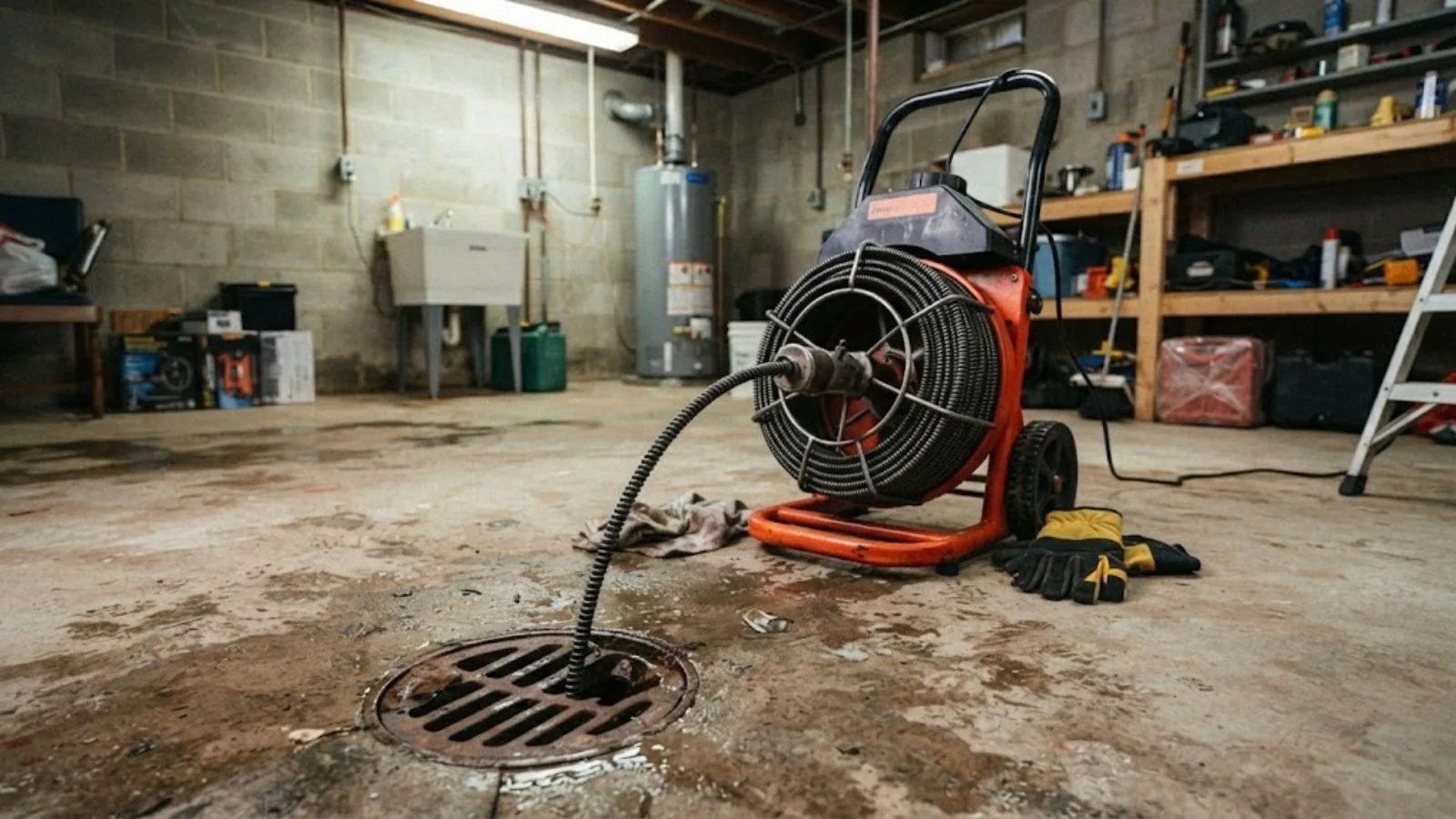
Drain snaking, also called cabling, feeds a coiled steel cable into the pipe while a motor spins it. The cutting head bores through the blockage or hooks it so it can be pulled back out. For hair, paper and most kitchen clogs, a cable is quick and does the job.
A cable has limits. It punches a hole through a clog, and in a greasy line the hole can close again within weeks because the grease on the pipe wall is still there. It also struggles with thick root mats and cannot scrub the pipe clean. When a line clears and then slows again, the cable did its job and the pipe still needs more.
That is the point to step up to hydro jetting, which sends high-pressure water through a nozzle that washes the full circumference of the pipe. If the same line has stopped more than once, we often run a camera first so the next step is based on what is actually in there.
Kitchen sink clogs: grease, food, the disposal and the dishwasher line
Kitchen drains are the busiest and the greasiest in the house. Cooking fat goes down warm and liquid, then cools into a soft white wall on the pipe interior. Coffee grounds, rice and pasta stick to it, and the passage shrinks a little more each week.
A garbage disposal grinds food into small pieces, but it does not make grease disappear. Those pieces settle in the first horizontal run of pipe past the trap. The dishwasher drain hose also ties into the disposal or the sink tailpiece, so a clog there can send gray water into the dishwasher tub or back up through the second basin of a double sink.
For a kitchen stoppage we check the trap and the disposal outlet first, then cable the branch line toward the wall. If the blockage sits farther in, we cable or jet toward the main. A jammed or humming disposal is its own repair, and our garbage disposal repair page covers it.
Minnetonka homes, older pipes and the question of who owns the line
Much of Minnetonka's single-family housing was built between 1950 and 1970, and about 56% of the city's homes are single-family detached. Homes from that era often still have their original drain lines, so repeated clogs in a house like that justify a camera look rather than a fifth round of cabling.
The other big group is apartment and condo living. Roughly 29% of Minnetonka's housing units sit in buildings of 20 or more units, where several apartments share a vertical drain stack. A clog in a shared stack shows up in the lowest unit first, even though the blockage may be floors above.
On the ownership question: the city runs its own utilities through Minnetonka Public Works, but the pipe from your house to the connection point is usually your responsibility. If you are unsure where your property's side ends, ask the city utilities office before you assume the main is the city's problem. Our plumber can tell you what the camera shows, and you can take that to the city.
When a backed-up drain is an emergency
A drain backing up into a tub, a shower or a basement floor drain is an emergency, and it does not wait for business hours. Our 24/7 line takes these calls at night and on weekends, and same-day appointments are available when the schedule allows.
Wastewater in the house is not clean water, so while you wait, reduce what goes in and keep people and pets out of it.
- Stop running water in the house. No showers, no laundry, no dishwasher cycles.
- Do not flush. Every flush sends more water into the blockage.
- Keep children and pets away from standing wastewater.
- Move belongings off the floor if the water is still rising.
- Skip the chemical opener. It can burn a technician and does not clear a main line.
- Note which fixtures are slow or backing up and tell the dispatcher. It tells us where the blockage sits.
When the clog is really a leaking drain line
Occasionally a drain that keeps clogging is hiding a leak. A cracked or separated joint lets water and waste seep into the soil or slab, and roots follow that moisture into the opening. The warning signs are a damp spot under a basement slab crack, a musty smell with no visible source, or a line that clears and refills within days.
Cabling cannot fix a broken pipe. When we suspect a leak, we run a drain camera and, if needed, hand the job to a repair plan. The sewer camera inspection page explains what the camera can show.
What a drain call looks like
Every call goes a little differently, but the sequence is steady.
Dispatch asks the right questions
Which fixtures are affected, how long it has been going on, and whether water is rising. This tells us which tools to bring.
The plumber confirms the location
We test fixtures, check the cleanout if there is one, and decide whether the problem is a branch line or the main.
You hear the price before work starts
We explain the method and the cost, and you decide. If the first method will not hold, we say so up front.
We clear it and prove it
After cabling or jetting, we run water through the line to confirm flow, and tell you what we pulled out.
What drives the price of clearing a drain
Two clogs that look alike from the sink can cost different amounts. These are the factors that move the number.
Home insurance often excludes plain maintenance clogs, but a sudden sewer backup may be covered if you carry a water backup endorsement. Read your policy and call your insurer before you decide.
Habits that keep drains open between visits
A few small habits reduce how often you need us.
- Wipe greasy pans with a paper towel and bin it instead of rinsing fat down the sink.
- Fit a mesh strainer on the tub and shower drains to catch hair.
- Flush toilet paper only. Wipes labelled flushable still tangle in older pipes.
- Run hot water for a minute after the dishwasher finishes.
- Know where your main cleanout is, so a plumber can reach the line fast.
- Treat a drain that slows twice in a month as a signal to call, not a coincidence.
Check any plumber's licence before the work starts
Minnesota requires a plumbing contractor licence for plumbing work in communities over 5,000 people. You can look up any plumber or company on the Minnesota Department of Labor and Industry Check a License page. Our plumbers are licensed and insured, and you can compare notes with that lookup.
Questions about drain cleaning in Minnetonka
Yes. The 24/7 line is answered around the clock, including nights, weekends and holidays. A backup into a tub or basement floor drain gets priority, and same-day appointments are available when the schedule allows.
We advise against it. Chemicals rarely clear a main line, and they leave caustic liquid in the trap that can burn a technician. If water has not moved after one attempt, call.
In most cases the pipe on your property, up to the connection point, is yours. The city runs the public main through Minnetonka Public Works, so ask the city utilities office where the dividing point sits for your address. A camera inspection helps show which side the blockage is on.
Call the 24/7 line and tell the dispatcher which unit is backing up and how many units share the stack. Shared stacks clog at floors above where you see water, so we often cable from a roof vent or cleanout, and we can schedule recurring maintenance jetting with the owner. The same applies to buildings in nearby Hopkins and Plymouth.
A cable opens a channel through the blockage but leaves the coating on the pipe wall. Grease, scale or roots then rebuild the problem. A hydro jet and a camera look at the pipe will find the reason.
Yes, in most cases. Yard drains collect leaves, mud and roots. We cable or jet them toward the discharge point and tell you if the pipe is crushed or shifted.
Pull the grate and look at the trap. A dry trap lets sewer gas rise, so pour a pitcher of water in. If water backs up through it, that is a main line signal and worth a call.
A properly sized cable and an experienced hand will not harm sound pipe. Old, brittle or already cracked pipe is a different matter, which is why we ask about the age of the line before we start.