Sewage backup in the house: what to do right now
A sewer backup is an emergency. Wastewater is rising through the lowest drain in the house, and it will keep coming as long as water is used upstairs. Call the 24/7 line at any hour, including nights and weekends. Same-day appointments are available when the schedule allows.
Until a plumber arrives, the goal is to put less water into the blocked pipe and keep people out of the affected area.
- Stop using water at every fixture. No toilets, no showers, no washer.
- Keep children and pets out of the room. Sewage carries bacteria.
- Turn off power to a flooded area only if you can reach the panel without standing in water.
- Lift valuables and boxes off the floor.
- Do not use a plunger or chemical opener on a main line backup.
- Take photos of the water and affected items for your insurance claim.
Sewer backup: your private line, the cleanout and the public main
Your home connects to the public sewer through a private lateral, a pipe that runs from the house to the municipal main. In Minnetonka the main is operated by the city, under Public Works. The lateral, up to the connection, is generally the property owner's responsibility, so the first question after a backup is where the blockage sits.
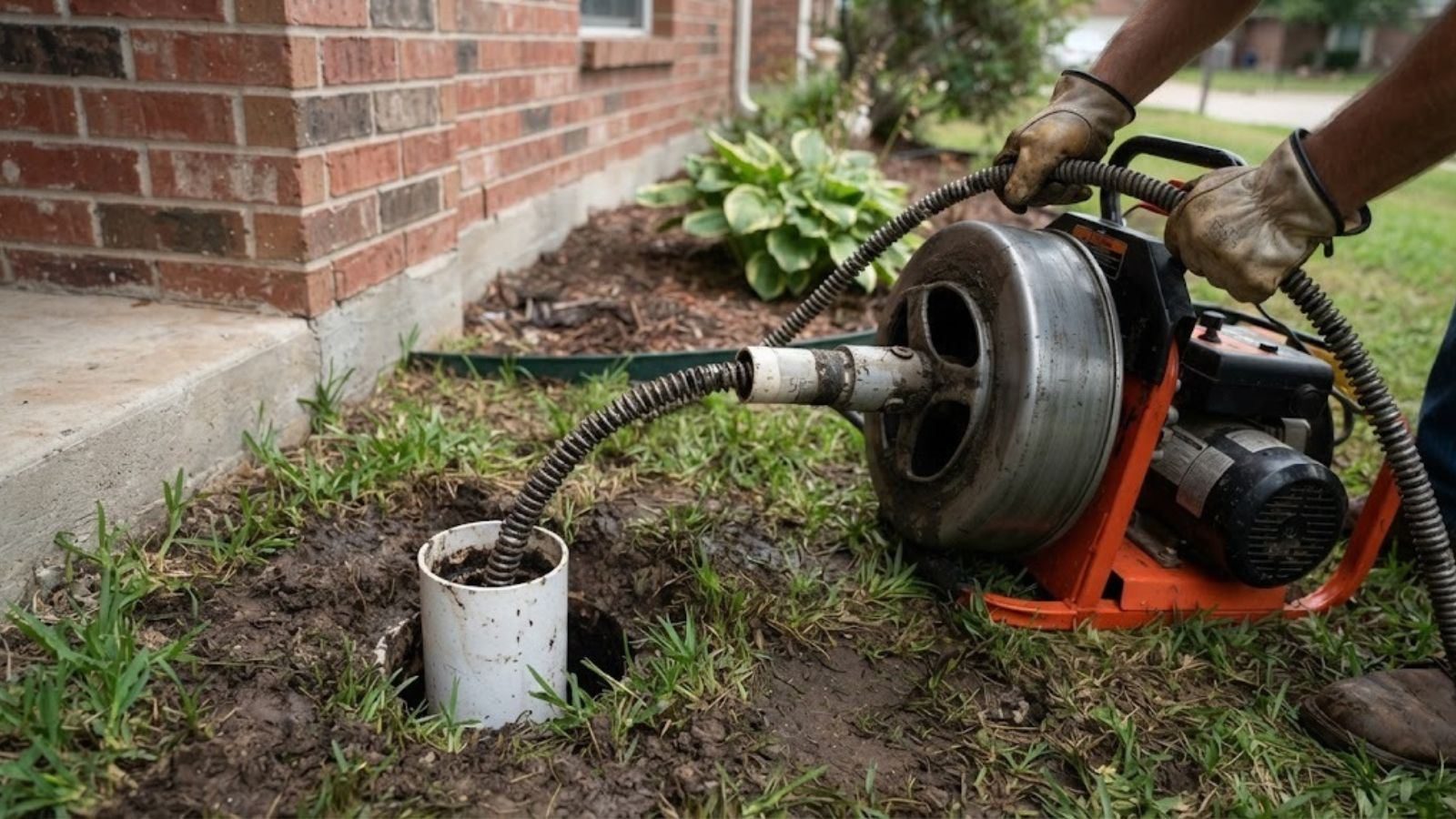
The cleanout is the key. It is a capped access pipe, usually in the basement or outside near the foundation. Opening it (a plumber should do this) tells us a lot. If the cleanout is dry, the blockage is between the house and that point or in the house drain. If it is full of waste, the line downstream is blocked, and we can clear it from there with a machine.
If the camera shows the blockage out in the public main, the city handles that part. Call the city utilities office, and tell them what our camera saw. If your neighbors on the street are also backing up, mention that too. Clearing a building sewer is routine maintenance, but a repair or replacement falls under Minnesota Rules chapter 4714, the Minnesota Plumbing Code, and the licensing standards of the state.
Signs of a blocked sewer line and what happens next
Not every slow drain is a sewer problem. This table separates the signals.
| Sign | What it suggests | Next step |
|---|---|---|
| Sewage in basement drain or tub. | Main or lateral blocked. | Stop water use, call 24/7. |
| Toilet bubbles when the washer drains. | Partial blockage in the main. | Cable or jet soon, camera. |
| All drains slow, no sewage yet. | Early main line restriction. | Schedule cleaning before it stops. |
| Backup returns within weeks. | Roots, grease or a damaged pipe. | Camera, then jetting or repair. |
Main sewer cleaning: how the work is done
Main sewer cleaning uses a larger machine than a sink cable. A heavy cable with cutting heads goes in through the cleanout and works through roots, paper and compacted waste. For grease or scale, a hydro jetter follows. Our hydro jetting page explains how the water scouring works, and that is often the final step.
When it is done, we run water, and often a camera down the line to confirm the pipe is clear and to look for what caused the blockage.
Sewer drain cleaning for houses with older laterals
Sewer drain cleaning on an older home deserves a bit more care. Much of Minnetonka's single-family stock was built between 1950 and 1970, and a lateral of that age may be clay tile or cast iron. Those materials hold roots and scale, so a camera look after cleaning tells you whether the pipe is sound.
If the home is in a multi-unit building, the cleanout serves the whole building. About 29% of Minnetonka's housing units are in buildings with 20 or more units, and a blockage there backs up the lowest apartment first.
When cleaning keeps failing, the pipe is the problem
If a sewer line has been cleared two or three times and keeps backing up, the cause is usually structural: a bellied section holding water, an offset joint or a cracked pipe with roots. At that point more cleaning only buys time. Ask for a camera inspection and read our sewer line repair page to see the options, including trenchless lining.
Cutting the odds of a second backup
After a main line is cleared, a few habits and checks keep it that way.
- Keep cooking grease out of every drain, including the kitchen sink and the dishwasher line.
- Flush only toilet paper. Wipes, even those sold as flushable, collect in the lateral.
- Watch large trees near the line from the house to the street, since roots seek out joints.
- Know where the cleanout is, and keep the cap clear of snow, mulch and storage.
- Ask for a camera pass after any serious backup, so you know the pipe condition.
- Call at the first slow drain across the house rather than waiting for a full stop.
What goes into the cost of cleaning a sewer line
A clean main line costs less than a ruined basement, but prices vary. These are the drivers.
A sudden sewer backup may be covered if your policy includes a water backup endorsement, while routine cleaning is treated as maintenance. Read your policy and call your insurer, and keep photos and your invoice.
Questions about sewer line cleaning in Minnetonka
Yes. The 24/7 line is staffed around the clock, with nights, weekends and holidays covered. A sewage backup gets priority, and same-day appointments are available when the schedule allows.
A plumber opens the main cleanout and runs a camera. If the blockage is in your lateral, we clear it. If it is in the public main, contact Minnetonka Public Works, and share what the camera found.
People do, but large cables can snag, break or damage old pipe, and a backup is a hazard. A plumber can also camera the line, which a rental cannot do.
Roots grow most actively in warm, wet months, and a root-filled joint catches paper. Jetting with a root-cutting nozzle clears them, and a repair stops them returning.
Yes. Slow drains across the house, gurgling toilets and a sewer smell are early signs. Cleaning then costs less than cleaning up after a backup.