A cracked pipe with roots, and the question of a small fix
Many homeowners arrive here after a camera showed a single crack with roots growing through it. The natural question is whether just that spot can be repaired. It is a fair question, and sometimes the answer is yes.
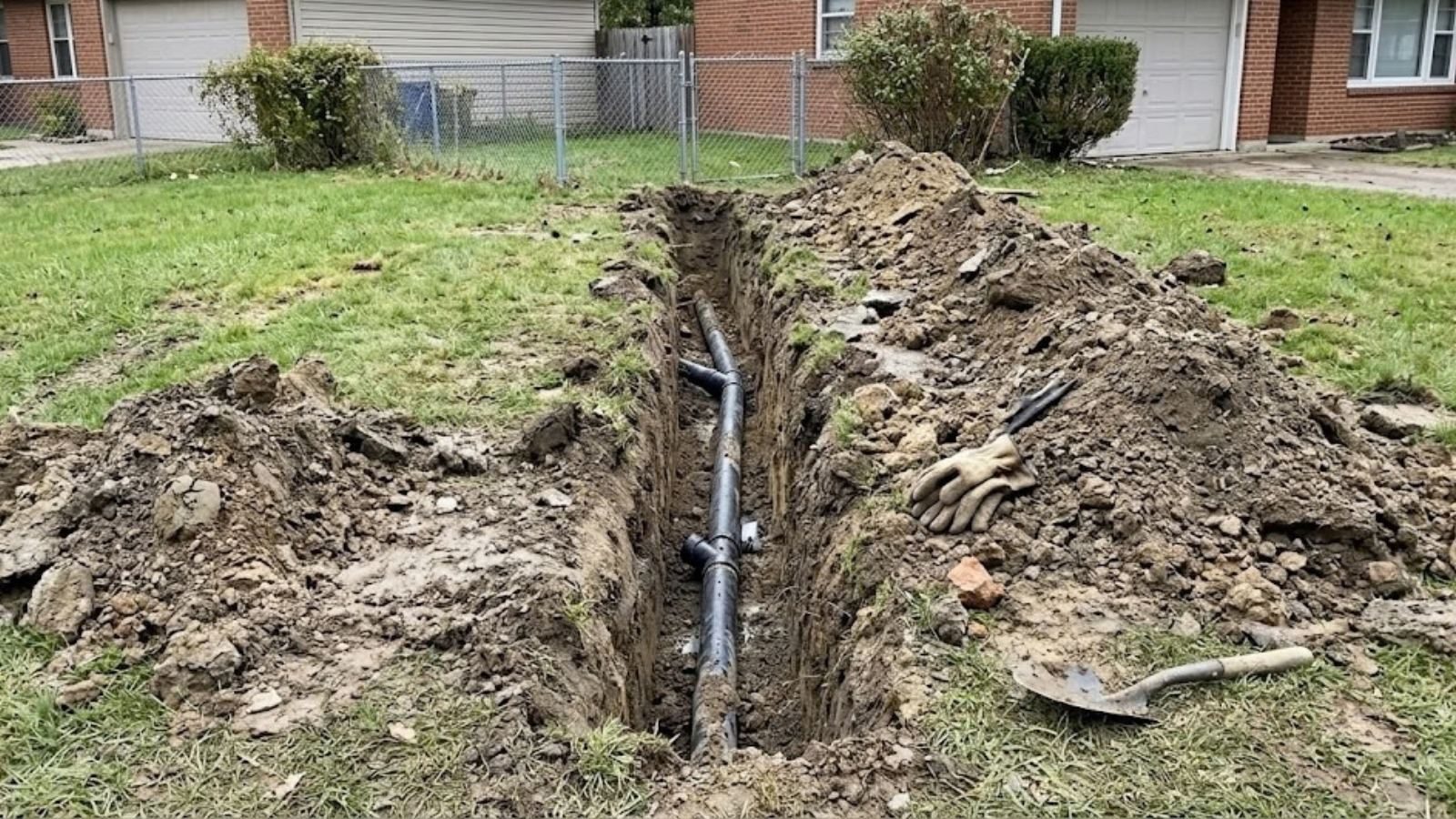
A spot repair works when the rest of the pipe is sound. If the camera shows one cracked section or one failed joint, and the pipe on either side is in good shape, replacing that short piece can be the sensible choice. The trouble starts when the crack is a symptom. Old clay or cast iron lines tend to fail at several joints, and a spot repair at one only moves the leak to the next.
That is why the camera view of the whole run matters before anyone digs. We look at the pipe from the house to the street, mark where each defect sits and tell you what we see. Then the decision is yours. Our sewer camera inspection page explains the process.
Whichever route you take, a pipe with active root intrusion should be cleaned first, since roots hide further damage behind them. A clean pipe also lets the camera see joints, bellies and offsets that a root mass would cover. Skipping that step is how a second defect gets missed and a repair fails a year later.
Dig, spot repair, lining or full replacement
Each method answers a different problem. Use this table as a starting point.
| Option | Best for | Trade-offs |
|---|---|---|
| Open-cut dig and spot repair. | One failed section, pipe otherwise sound. | Yard or floor is opened. Other weak joints stay. |
| Trenchless lining. | Cracks, root entry and joints along a sound-shaped pipe. | Needs clean pipe and a pipe that holds its shape. |
| Full replacement (dig). | Collapsed, bellied or badly offset pipe. | Most disruptive, the longest fix. |
| Pipe bursting or pull-in. | Replacing a whole line with little digging. | Needs access pits. Not for every soil or route. |
Lining cannot fix a pipe that has fallen out of shape, and a collapse needs replacement. The camera is what separates those cases.
Cost differences between these options can be large, so ask for each priced in writing before you choose. A trusted plumber will not push the most expensive option when a smaller fix would hold.
Trenchless pipe lining: how it works
Pipe lining, also called cured-in-place pipe, builds a new pipe inside the old one. After the line is cleaned and jetted, a resin-soaked felt tube is pulled or inverted into the pipe. It is inflated against the walls and cured with hot water, steam or light. When it hardens, it forms a smooth, jointless inner pipe.
The big advantage is less digging. Access is usually through a cleanout or a small pit, so lawns, driveways and landscaping stay mostly in place. The liner also seals joints, which stops roots from returning.
Lining is not for every pipe. The line must be cleaned first, often with hydro jetting, and it cannot bridge a large gap or a pipe that has dropped. A slightly smaller inside diameter is a trade-off. Your plumber will tell you if the pipe qualifies.
Cast iron pipe repair in older homes
Houses from the 1950s through the early 1970s often have cast iron drain and sewer pipe, at least under the slab or near the foundation. Much of Minnetonka's single-family housing was built between 1950 and 1970, so this is a regular case here.
Cast iron rusts from the inside and forms scale. Over decades the walls thin, and sections can crack or flake. Repairs range from replacing a section with PVC or ABS using proper couplings, to lining a longer run. A camera shows scaling, thin spots and cracks, so we look before recommending anything.
Cutting cast iron under a slab is a bigger job than it sounds, and the concrete has to be broken and patched. For a long run, lining or a reroute can be less disruptive, so we price both.
Backup repeats: when the repair decision comes before the cleaning
Our sewer line cleaning page covers what to do in the first hours of a backup. This section is for the other question: you have cleared it once or twice and it keeps coming back.
Repeated backups usually point to a structural cause. A belly, where the pipe sags and holds water and paper, will collect waste no matter how often it is cleaned. An offset joint snags paper in the same place. Roots return through an open joint. Each of these calls for a repair, not another round of cabling.
The camera and a locator tell us exactly how far from the house the defect sits and how deep it is. With that, we can price a spot repair, a liner or a replacement, and you can compare them.
From first camera pass to a finished repair
A repair that works starts with a clear picture of the pipe, and follows a set order.
Camera the full run
We clean the line enough to see, then record the pipe from the cleanout to the connection. Each defect gets a distance marker.
Locate and measure depth
A pipe locator on the surface tells us where the defect sits and how deep. That decides whether a dig is a small pit or a trench under a driveway.
Compare options with prices
You get the spot repair, lining and replacement choices that fit the pipe, with the price of each before work starts. If one option is a poor fit, we say so.
Repair, test and close
After the work, we camera the line again, run water through it and show you the result. If a permit applies, the inspection comes before backfill or restoration.
If your property has a septic system
Some properties are not on a public sewer at all and use a private septic system instead. In that case the repair path is different. The pipe from the house to the septic tank, and the pipe from the tank to the drain field, have their own failure modes, and tank pumping or drain field work is a separate trade.
We can camera the line from the house to the tank and repair that pipe. For tank or drain field problems, we will tell you if a septic specialist is the right call. Ask the city whether your address is on public sewer, and bring up any septic records you have.
Drain pipe repair inside the house
Not every repair is outside. A cracked drain pipe in a basement ceiling or under a slab leaks wastewater into the building. We replace damaged sections with matching pipe and fittings, test the new joints, and close up. For a quick comparison, our drain cleaning page covers when a clog is the issue instead. Every new joint is water tested before the wall, ceiling or floor is closed, so a slow weep does not turn up months later.
Sewer backup or a collapsed line: what to do now
A line that has collapsed or broken often shows up as a sudden backup, or as a sinkhole or soggy patch in the yard. It is an emergency. The 24/7 line is open nights and weekends, and a same-day appointment is possible when the schedule allows.
While you wait, protect the house and people.
- Stop all water use in the house until the line is checked.
- Keep children and pets away from any wet or sunken area in the yard.
- Do not dig or probe the soil yourself. You may hit gas, water or electrical lines.
- Move belongings off the basement floor.
- Tell dispatch about any recent excavation, tree removal or heavy equipment near the line.
- Take photographs for your insurer.
What makes one sewer repair cost more than another
Sewer repair has the widest range of any plumbing job. These factors explain why.
Standard homeowner policies often exclude wear, tree roots and gradual deterioration, while a sudden collapse or backup may be covered under certain endorsements. Read your policy, call your insurer first and keep camera footage.
Permits and licensing for sewer work
Permit rules vary by project, so ask the City of Minnetonka building department whether your repair needs a permit. The city's plumbing permit form says work is not to start without one. You can also verify any plumber's licence on the Minnesota Department of Labor and Industry Check a License lookup. If you live in a nearby town, such as Hopkins, ask that city's inspections office.
Questions about sewer line repair in Minnetonka
Yes. The 24/7 line is answered around the clock, including nights and weekends. A collapsed line or backup gets priority, and same-day appointments are available when the schedule allows.
Sometimes. If the camera shows one failed section and the rest of the pipe is sound, a spot repair makes sense. If several joints are weak, a liner or replacement may be the better value.
A properly installed liner is designed to last for decades, but we do not quote a number for your pipe. The result depends on prep, resin and the condition of the host pipe, so ask for details in your estimate.
A liner or a replaced section seals the opening that roots entered. Roots may still grow near the pipe, but they have no way in once the joint is sealed.
It depends on the work. Ask the City of Minnetonka building department, and we can tell you what documents they usually ask for.
Signs include repeated backups, a cable that stops at the same depth, and a wet or sunken patch in the yard. A camera confirms it.
We can repair the pipe leading to the tank. For tank or drain field problems, we point you to a septic specialist.