
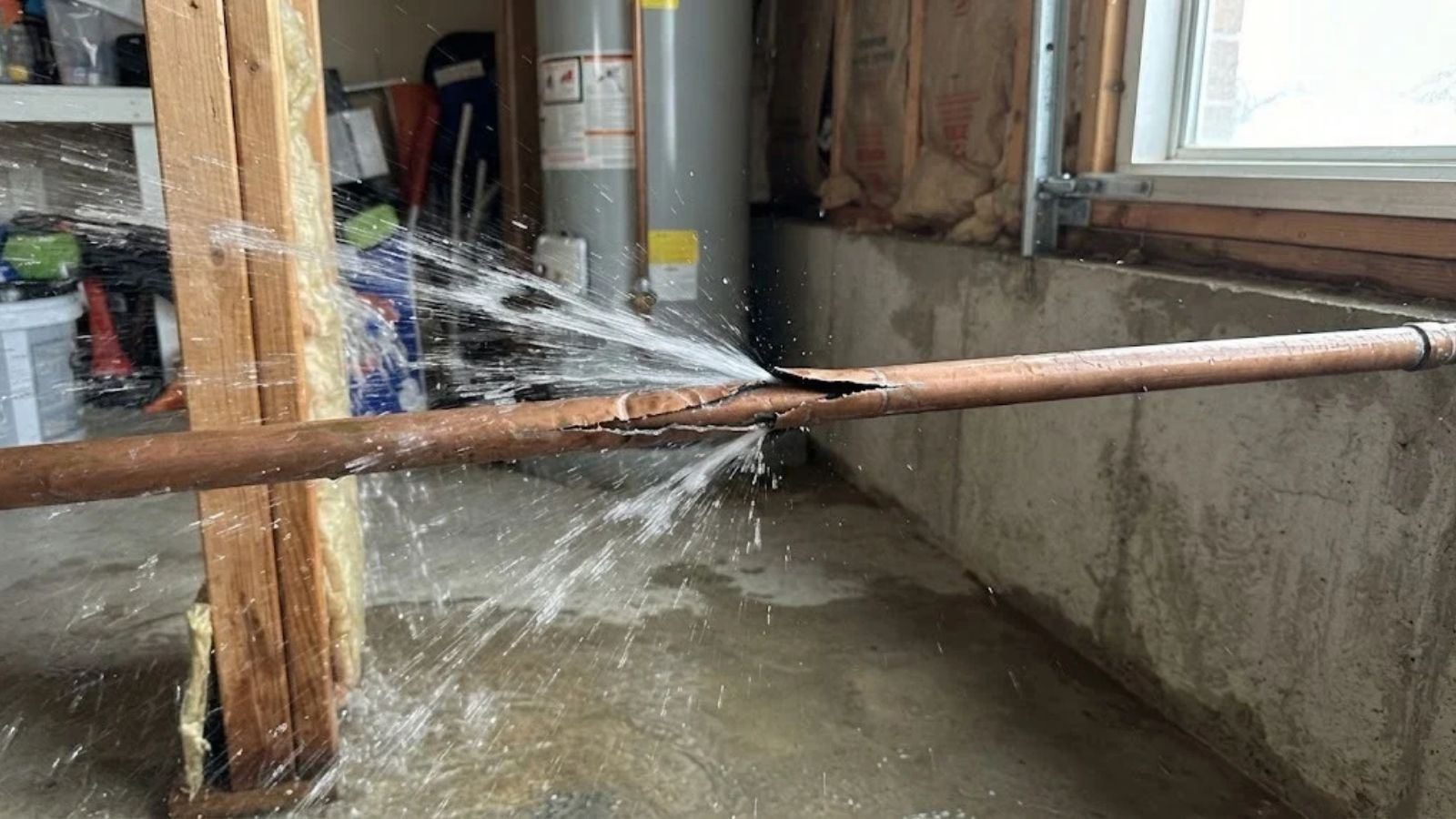
When the tap runs dry in a deep freeze
If water slowed to a trickle or stopped on a subzero morning, a pipe has probably frozen somewhere between the street and the faucet. Ice alone does not flood a house. The danger is that the pipe splits as the ice expands, and the leak only shows up when the ice melts.
The 24/7 line is open at any hour if you find water already coming through a ceiling or wall. For a pipe that is merely frozen, you can usually act yourself, starting with these steps.
- Locate your main water shutoff now, so you can close it in seconds if a pipe turns out to be split.
- Open the faucet on the frozen line. Melting ice needs somewhere to flow, and an open tap relieves pressure.
- Open cabinet doors under sinks on exterior walls so warm room air reaches the pipes.
- Look for bulging, frost or a visible crack on the pipe. If you see any, close the main before you heat anything.
- Leave the heat on and turn it up a few degrees while you work.
Thawing a frozen pipe without making it worse
Thaw from the faucet end back toward the frozen spot, so melted water can drain out as you go.
Find the frozen section
Feel along exposed pipe for the coldest stretch and watch for frost on the surface. Pipes freeze where cold air reaches them: exterior walls, an unheated garage, a crawlspace or an uninsulated rim joist.
Apply gentle, steady heat
A hair dryer on low, a heating pad wrapped around the pipe, or towels soaked in hot water all work. Keep any dryer away from standing water and use a GFCI outlet. Never use a propane torch, a space heater under the pipe, or any open flame, since fire damages the pipe, the framing and the wiring.
Keep the tap open until full flow returns
Water coming back as a trickle means the ice is not fully gone. Keep warming. When flow looks normal, leave the tap open a minute longer, then close it.
Check for leaks after the thaw
Walk the length of the pipe and look at joints, the ceiling below and the cabinet floor. A cracked pipe may drip slowly at first. Tape a dry paper towel against suspect spots and look again in half an hour.
Where pipes freeze first and what to check
The location of the freeze tells you how likely a split is.
| Location | Why it freezes | What to check afterward |
|---|---|---|
| Exterior kitchen wall. | Little insulation, cold air behind the sink. | Cabinet floor and ceiling below. |
| Unheated garage line. | No heat source. | Joints near the wall and the water heater. |
| Crawlspace or rim joist. | Drafty, close to the ground. | Wet insulation and soft subfloor. |
| Outdoor spigot line. | Hose left attached. | Inside shutoff and the pipe behind the wall. |
| Attic water line. | Cold air blows through gaps. | Ceiling stains and sagging drywall. |
If the pipe has already split
Close the main shutoff, then open the lowest faucet to drain the lines. Switch off power to any wet area at the breaker only if you can reach the panel without standing in water. Photograph the damage for your insurer and call for a burst pipe repair visit. The plumber will cut out the split section and join new pipe with press fittings or solder.
Why the split happens away from the ice
Ice does not usually burst the pipe where it sits. The ice plug acts like a closed valve, and as more water freezes it pushes the remaining water toward the closed faucet. Pressure spikes in that trapped stretch and the weakest spot gives way, often a few feet from the ice.
That is why opening the tap matters, and why a split can hide behind a wall far from the cold corner you were heating. When the ice melts, the leak starts. Check the whole run, not just the frozen section. Any replacement pipe is installed to the Minnesota Plumbing Code in Minnesota Rules chapter 4714, so a licensed plumber is the right person for anything beyond a simple thaw, since the code sets the standards for materials and joints.
After the water is back
A pipe that froze once can be weakened even if it did not leak. The ice stretches the wall of copper and may leave a hairline crack that opens weeks later. Watch the spot for a few days and check your water meter. If the dial moves while every fixture is off, you have a leak somewhere in the house.
A leak detection visit can find a hidden drip behind drywall without cutting into it. Plumbers use thermal imaging cameras and acoustic listening gear to trace the sound or the cold spot, so the repair stays small.
What Minnetonka homeowners should know about older houses and lakeshore homes
About 56% of Minnetonka homes are single-family detached, and the city's housing plan says much of that stock was built between 1950 and 1970. Homes from that era often have supply lines run through exterior walls and attached garages, so the first step is checking those spots before the next cold snap.
The eastern tip of Lake Minnetonka lies within the city, and homes near open water can take hard wind off the lake. Wind-exposed walls and vented crawlspaces freeze faster, so pipes there deserve extra insulation. Ask a plumber to look at any line you have never seen.
Source: City of Minnetonka housing plan.Before the next hard freeze
- Disconnect hoses from outdoor spigots and shut off the inside valve if you have one.
- Seal gaps in rim joists and around pipe penetrations with foam.
- Wrap exposed pipes in garages and crawlspaces with foam sleeves.
- Keep the thermostat steady, even if you are away, and open sink cabinets on exterior walls on the coldest nights.
- Let a faucet drip when the forecast is bitter. Moving water is harder to freeze.
- Know the main shutoff location and test it twice a year.
Freezing near the lake: Wayzata and Excelsior
Lakeshore towns face the same problem with extra wind. In Wayzata, the older neighborhoods on large lots, such as Holdridge and Highlands, mean longer pipe runs from the street, so Wayzata plumbers can check insulation along the whole run.
In Excelsior, the Victorian-era housing stock can have supply pipes running through cold outer walls, which is the first place to look after a freeze. If you are away for a winter weekend, a neighbor with a key and a quick temperature check costs far less than a ceiling repair.
Questions about this topic
Often, yes, if you can reach it and nothing has split. Open the tap and apply gentle heat from a hair dryer or a warm towel. If you cannot find the frozen spot or you see a crack, call a plumber.
A torch overheats the pipe, melts solder joints, scorches framing and can ignite insulation inside the wall. A hair dryer or heating pad warms slowly enough to be safe.
You often will not know until it thaws. Look for bulges, frost lines with water beneath, a wet ceiling or cabinet, or a water meter that spins with all fixtures off. When in doubt, close the main.
Many policies cover sudden burst-pipe water damage but not gradual leaks or maintenance issues. Read your policy and call your insurer. Take photos before you clean up.
A thin trickle on exterior-wall lines helps because moving water resists freezing and relieves pressure between ice and the faucet. It will not rescue a pipe in a very exposed spot.
Homes built from 1950 to 1970 often have pipes in exterior walls or near garages, which freeze first. Insulating those runs and sealing air leaks reduces the risk more than any other single step.
Related plumbing help
If this problem is happening now, these pages cover the work and the towns the 24/7 line serves.