
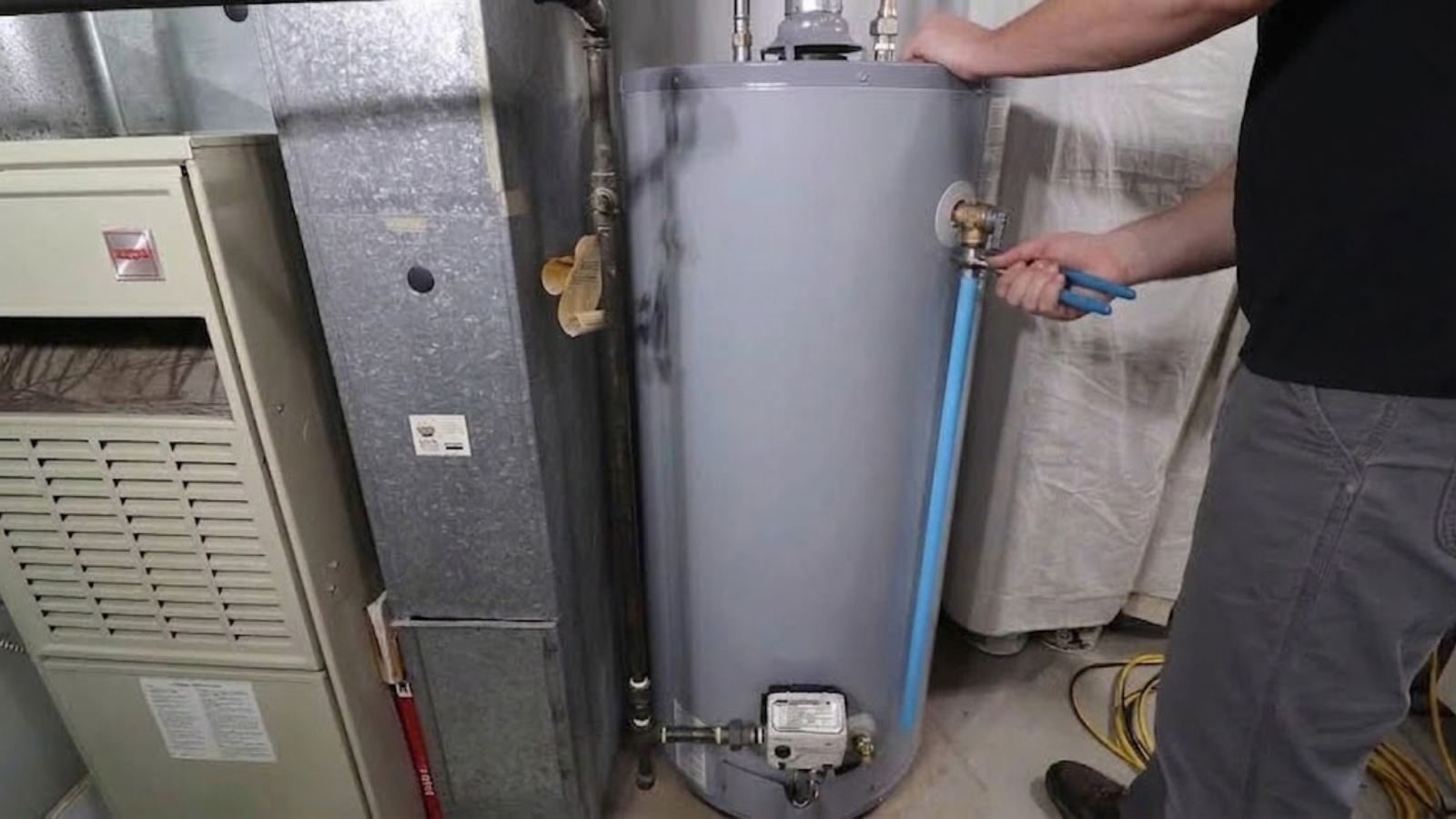
The connections, top to bottom
Picture the heater from above. The cold line enters on one top port and runs down a dip tube inside the tank so cool water feeds the bottom. The hot line leaves from the other top port and heads to the house. Both ports are usually marked on the tank, but check, because swapping them wrecks the way the tank works.
On the side sits the temperature and pressure relief valve, or T&P valve. At the bottom is the drain valve. That is the whole water side. Everything else is either gas, electric or the venting that goes with them, and those are separate jobs with their own rules. Water heater requirements are covered in section 4714.0504 of the Minnesota Plumbing Code, Minnesota Rules chapter 4714, and relief valve standards sit in section 4714.0608.
Each connection and what it does
Use this table to check a quote or inspect an installation.
| Connection | Purpose | What to look for |
|---|---|---|
| Cold inlet with shutoff. | Feeds the tank and isolates it. | Full-port valve within reach. |
| Hot outlet. | Sends heated water to the house. | Insulated near the tank. |
| Dielectric union or flex connector. | Joins steel tank to copper or PEX. | Keeps metals from corroding together. |
| T&P valve and discharge pipe. | Safety release for heat and pressure. | Pipe runs downward, no cap or valve on it. |
| Drain valve. | Flushes sediment, empties tank. | Clear space for a hose. |
| Expansion tank. | Absorbs pressure when water heats. | Supported, set to house pressure. |
Order of work for a swap
A like-for-like replacement follows the same sequence each time.
Shut down and drain
Turn off the fuel or power first. Close the cold supply, open a hot tap, and drain the tank through a hose to a floor drain. For electric units, test the circuit dead before touching anything.
Set the new tank in the pan
Level it on a drain pan piped to a floor drain where possible. A pan catches the slow drip that otherwise rots a subfloor.
Make the water connections
Install the shutoff, connect both lines with flex connectors, press fittings, PEX with the right adapters, or sweated copper. Soldering means open flame near insulation and wood, so many homeowners skip it for crimp or press methods.
Pipe the relief valve and fill
Fit the T&P valve and run its discharge pipe downward. Fill the tank with the hot tap open, check each joint for weeping, and only then restore power or fuel through a qualified installer.
Pipe materials you will meet at the tank
Your existing lines decide which method suits the job.
| Material | Joined by | Trade-off |
|---|---|---|
| Copper. | Solder or press fittings. | Durable, needs heat or a press tool. |
| PEX. | Crimp or expansion rings. | Fast and flexible, keep it clear of the flue. |
| CPVC. | Solvent cement. | Cheap, brittle near heat sources. |
| Galvanized steel. | Threads. | Old, corrodes inside, often must be replaced. |
The line you do not cross yourself, and what to do instead
Gas piping, a gas valve, a flue and a vent connector are for a licensed plumber. A loose gas fitting or a poorly drawn vent can leak gas or carbon monoxide into the home, and neither gives much warning. If you smell gas, leave the building and call the gas utility from outside.
Electric heaters need a correctly sized circuit and a grounded connection. If the breaker or wire is wrong, call a plumber or electrician. Never connect a tank to power until it is filled.
Look-over after the tank is set
Spend ten minutes on this before anyone calls the job done.
- Every joint is dry after the tank has been full and hot for an hour.
- The discharge pipe slopes downward and ends without a cap, plug or valve.
- Hot and cold lines are on the correct ports, with the shutoff handle reachable.
- The pan drain is clear and the expansion tank is supported, not hanging from the pipe.
- Water pressure at a hose bib is steady and does not creep up when the heater fires.
- The drain valve has room for a hose and has not been boxed in.
The relief valve and expansion tank get skipped most often
A T&P valve opens if water gets too hot or pressure climbs too high. Its discharge pipe must not be capped, plugged or threaded at the end, since a blocked valve cannot do its job. Minnesota Plumbing Code (Minnesota Rules chapter 4714) has sections on water heaters and on pressure relief, so a licensed plumber works to those titles.
An expansion tank matters when the home has a check valve, backflow device or pressure-reducing valve on the main. Heated water has nowhere to go, pressure spikes, and the relief valve starts to drip. If yours does, pressure is the likely cause. See how installations handle expansion or ask a plumber to measure it.
Mistakes that turn a good install into a leak
Reversed hot and cold ports are an easy miss, and so is overtightening a threaded fitting on a plastic-lined nipple. Forgetting to purge air makes the first hot tap spit and bang. Skipping thread sealant or using the wrong one leaves a slow drip you will not see until the floor stains.
The other classic is bundling the drain valve into a shelf or wall cavity so the tank cannot be flushed again. Leave room for a hose. A heater that can be drained and serviced lasts longer than one that cannot.
Where costs come from on a plumbed connection
Price for plumbing the heater depends on a handful of conditions. Check whether the old shutoffs and lines are sound, how far the tank sits from the drain, whether the code-required pan and discharge line need to be built, and whether an expansion tank is added. Old galvanized nipples that snap when disturbed add time.
A like-for-like swap is the simple end. A move to a new location, a new fuel or a different size is the long end. For the whole decision, replacement planning covers when it is smarter to replace than to repair.
What Minnetonka homeowners should know about permits and licenses
The City of Minnetonka plumbing permit application bases fees on project valuation. Residential permits start at $77 for valuations of $1 to $1,000, and plan review, re-inspection or a state surcharge may be added. The form says work is not to start without a permit. Fuel gas piping requires a city license and a state bond and uses a mechanical permit application, so gas work cannot be treated as casual DIY.
Eden Prairie works differently. Its city page lists water heaters among the items that need a plumbing permit, and a homeowner who owns and occupies the property may do their own work except natural gas. Neighboring Eden Prairie and Hopkins each have their own permit offices, so ask the building department in your city.
Source: City of Minnetonka plumbing permit application and City of Eden Prairie permit page.Questions about this topic
It runs downward to a safe point, often near a floor drain. The exact end point is a code and inspection question, so ask your plumber or city.
Yes, they are common. Choose ones with full-size bores and keep them short, without sharp kinks.
It separates dissimilar metals so the steel tank fittings and copper pipes do not corrode into each other.
A pan with a drain line limits water damage if the tank leaks. It matters most when the heater sits over finished space.
No. Gas connections are licensed work, and a leak can be dangerous. Hire a licensed plumber.
Search the Minnesota DLI Check a License lookup. A plumbing contractor must be licensed to work in communities over 5,000.
The City of Minnetonka plumbing permit application says work is not to start without a permit and lists no exemptions. Ask the City of Minnetonka building department about your specific project.
Related plumbing help
If this problem is happening now, these pages cover the work and the towns the 24/7 line serves.