
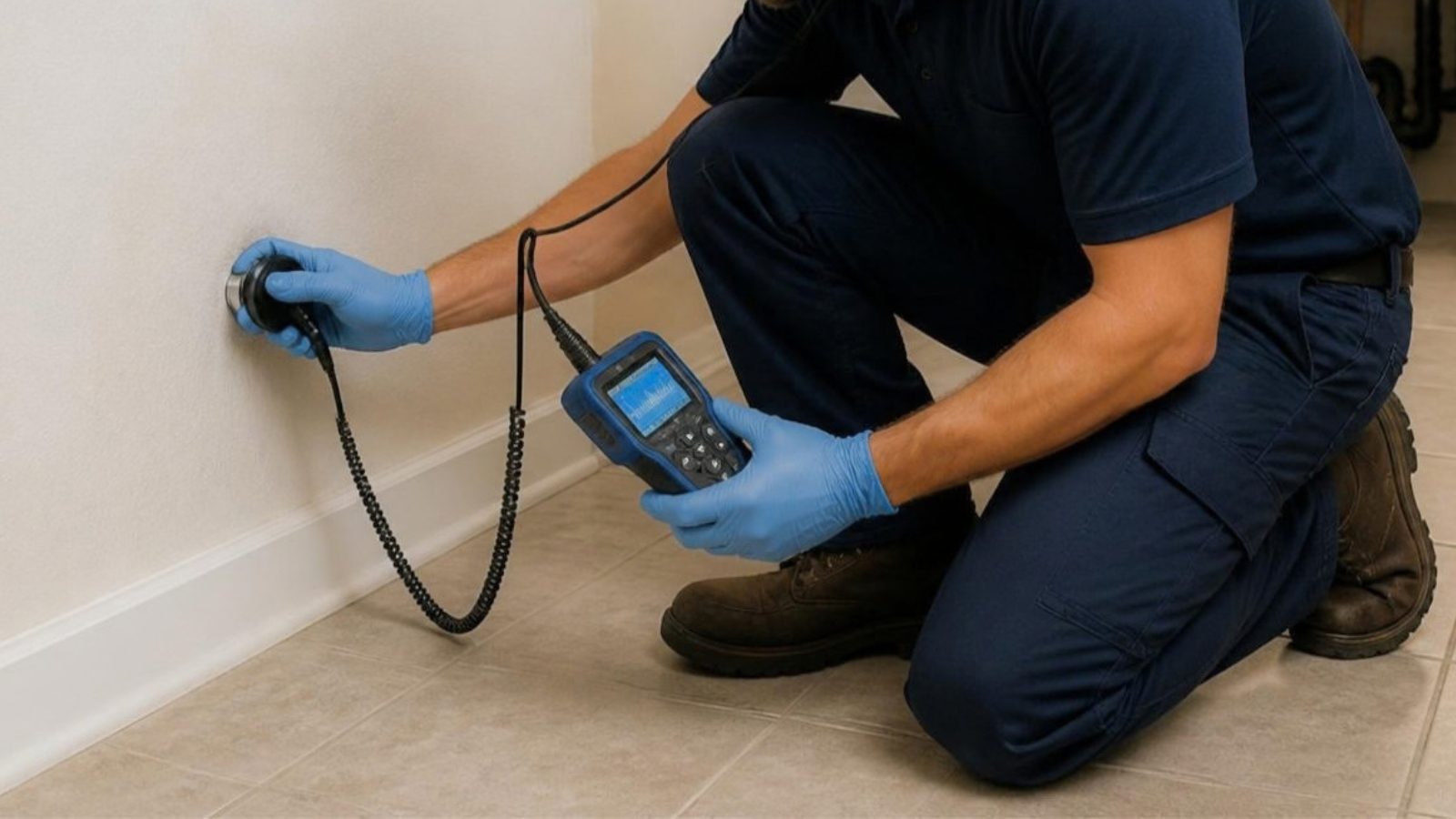
What the camera actually sees
A thermal imaging camera, often called an infrared camera, does not see water. It reads surface temperature and paints it as a color map. Wet material usually holds a different temperature from dry material, and a hot water line behind drywall can warm a strip of wall. The plumber reads those patterns as clues.
That is also why the tool has limits. A cool, damp patch can look like a plain cold spot from an exterior wall. A warm leak can vanish if the building is the same temperature as the water. Skilled use means pairing the image with other tests, not trusting a pretty picture. Fixing a leak once it is located is regulated plumbing work under Minnesota Rules chapter 4714, and the state sets licensing standards for it.
Which tool answers which question
No single device finds every leak. Plumbers choose by what the leak is likely to be.
| Question | Best tool | Limit |
|---|---|---|
| Where is the damp zone? | Thermal camera plus moisture meter. | Needs temperature contrast. |
| Is the pressurized line losing water? | Pressure test. | Does not show where. |
| Where along a buried line? | Acoustic ground microphone. | Noisy sites hide the sound. |
| Is the drain line leaking? | Drain camera, dye or smoke test. | Camera sees only pipe interior. |
| Is it a leak or condensation? | Meter plus conditions check. | Needs a second look later. |
Not every stain is a plumbing leak
A good scan rules sources out as well as in.
Roof or window water
Stains that grow after rain, not after showers, usually come from outside. A thermal scan shows a cold, damp patch, but the plumbing test stays dry.
Condensation
Cold pipes and ducts sweat in humid weather and drip. The pattern follows the pipe or duct, and it fades when the air dries out.
Supply line leak
A stain that grows day and night, whatever the weather, points to a pressurized line. The meter usually moves with every fixture off.
Drain or fixture leak
Stains that grow only after a sink, tub or toilet is used point to a drain or seal. A fill test of that fixture confirms it.
A typical thermal scan visit
The process takes patience but not much disruption.
Interview and baseline
The plumber asks where stains appear, when the meter spins, and whether water is used at certain times. Turning off every fixture and watching the meter is a strong first test.
Scan the surfaces
The camera sweeps ceilings, walls and floors, looking for patterns that follow pipes or spread from a point. Heating the line with hot water for a short time makes a hot leak easier to see.
Confirm with a meter or test
A moisture meter checks the flagged area. Pressure testing isolates which line is losing water, and an acoustic ground microphone can pinpoint a leak on a buried line.
Mark, document and plan
The plumber marks the spot and photographs the readings. Opening a wall or ceiling happens only after the evidence agrees from at least two tools.
A slab leak or burst line is not a wait-and-see problem
If water is actively running, a ceiling is bulging, or the meter races with every fixture off, shut off the main valve and call the 24/7 line. Active flooding or a collapsing ceiling is an emergency, and scanning can wait until the water is stopped.
Once the supply is off, the plumber can fix the failed section. For a split pipe in a wall or ceiling, burst pipe repair starts with stopping the water and drying the area before the scan results are used for a permanent fix.
When the scan is the right first step
Thermal scanning earns its place when the leak is hidden and the damage is small. Think of a faint stain on a ceiling, a warm spot on a floor, a water bill that climbed with no visible reason, or a musty smell with no source. It reduces how much drywall is cut. A plumber who can point at one spot makes a smaller hole than one who has to guess.
It is less useful for leaks under thick concrete, for metal-clad surfaces, or in rooms at the same temperature as the water. In those cases the pressure test and listening gear lead, and our leak detection service combines tools so no single limit decides the result.
What to do before the plumber arrives
A few small steps make the scan more accurate.
- Note when stains appeared and whether they grow after showers or laundry.
- Photograph the stain with a coin beside it for scale.
- Read the water meter, then read it again after an hour with every fixture off.
- Avoid running the heat or air conditioning hard right before the scan.
- Move furniture away from the wall or ceiling in question.
- Shut off the main only if water is actively flowing.
What a clean scan does and does not mean
A scan that shows nothing is useful, but it is not a promise that no leak exists. Seasonal temperature, a slow drip behind tile, or a cold exterior wall can hide a problem for a few days. If the meter still moves with everything off, schedule a pressure test and a listening pass rather than closing the case.
Rescanning after the building has cooled overnight or after a hot water run often changes the picture. Good plumbers say so when a result is uncertain and propose the next test instead of opening walls on a hunch.
What drives the cost of finding a hidden leak
Cost follows search time, access, and the tools used. A single suspect room is quick. A multi-story building with several units takes longer. Difficult floors, finished ceilings and noise from street traffic can add steps. A clear price before work starts keeps the scope honest.
Insurance may help with sudden water damage, but many policies do not cover slow leaks or the search itself. Read your policy and call your insurer before you decide on repairs.
Records a property manager should keep
A leak between units turns into paperwork fast, and good records protect everyone.
- The date and location of the first stain, with photographs.
- The thermal images and moisture readings the plumber captures.
- Which units and shared walls were checked, and who gave access.
- The pressure test result for each isolated line.
- A written description of the repair and what was opened.
- Any notice given to residents about water shutoffs.
What Minnetonka property managers should know about leaks between units
The housing chapter of the City of Minnetonka's planning documents estimates 29% of the city's units sit in multifamily buildings of 20 or more units. In a building that size, a stain in one unit may come from a line in the unit above or a shared stack in the wall. That is why a scan should be documented and shared with the owner and association before anyone opens a wall.
Tell the building manager when a stain appears, and allow access to the unit above. Neighboring Wayzata and Plymouth have mixes of condos and houses, so the same teamwork applies there.
Source: City of Minnetonka housing chapter, 2015 estimates.Questions about this topic
No. It reads surface temperature, and a plumber interprets what the pattern suggests.
No. It works best when there is a temperature difference between the wet area and its surroundings.
Not usually. Moisture meters, pressure tests and listening gear confirm what the image suggests.
Not during the scan. The plumber opens a wall only after tests point at the same spot.
Sometimes the camera hints at warm spots on the floor, but an acoustic ground microphone and pressure tests usually decide it.
Call the building manager or association, then the plumber. A leak between units needs access to more than one apartment.
Related plumbing help
If this problem is happening now, these pages cover the work and the towns the 24/7 line serves.