Pick the snake before you buy the snake
A plumbing snake, also called a drain auger, is a coiled steel cable with a corkscrew or hook on the end. You feed it into the drain, turn it, and either snag the clog so you can pull it out or punch a hole through it so water moves again. It works on clogs within the first few feet of a drain line.
Most failed DIY attempts come from the wrong tool. A toilet needs a closet auger with a protective sleeve, because a bare cable scratches porcelain. A bathroom sink needs a thin cable that can make the tight bend in the trap. A tub needs a longer one. Buying one tool for every fixture rarely makes sense, so match the tool to the drain you are fighting today.
Drain clearing is routine, but replacing a trap or drain pipe falls under the standards of the Minnesota Plumbing Code in Minnesota Rules chapter 4714.
Snake types and what each one is good for
Reach and cable thickness decide what a snake can do. Use this as a quick filter.
| Tool | Best for | Typical limit |
|---|---|---|
| Hand-crank hair snake (plastic barbed strip). | Bathroom sink and tub hair clogs. | Does nothing on grease or roots. |
| Hand auger, quarter-inch cable. | Sinks, tubs, shower drains. | Short reach, binds in tight bends. |
| Closet auger. | Toilet clogs only. | Cannot reach past the toilet trap. |
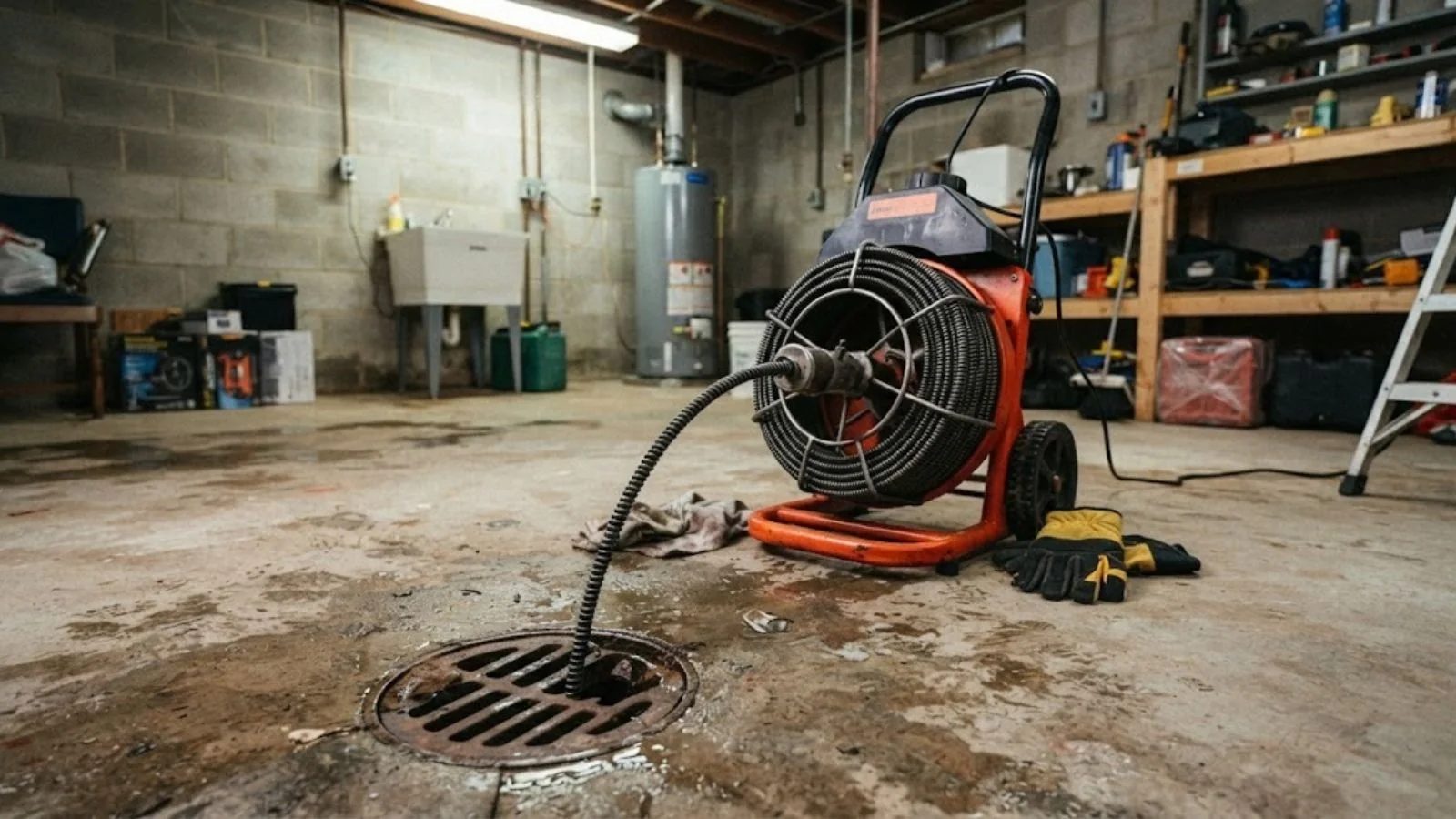
| Drum auger or power sink machine. | Kitchen lines, longer branch drains. | Can scar old pipe if forced. |
| Hydro jetter (pro tool). | Grease, scale, heavy buildup. | Needs access and training. |
If the blockage sits farther out than a homeowner cable can reach, the tool is not the problem. The clog is simply past the point where a hardware-store snake works.
Running a hand auger in a bathroom sink
Hair and soap scum cause most bathroom clogs, and they sit close to the drain opening. This is the usual routine.
Clear the stopper and the trap first
Pull the pop-up stopper and wipe off the slimy hair wrapped around it. Put a bucket under the trap, and if the clog is in the trap itself, unscrew the slip nuts and empty it by hand. Many sink clogs end right here without any cable.
Feed the cable slowly
Push the tip into the drain until you feel resistance, then tighten the thumbscrew about a foot back and crank. Let the corkscrew bite. Do not shove. Forcing a cable around the trap bend is how people chip chrome and pry fittings loose.
Hook, then pull
When the cable stops advancing or the handle gets harder to turn, work it back and forth to snag the clog. Withdraw the cable slowly onto a rag, because the clog comes out with it and drips on everything.
Flush and test
Run hot tap water for a full minute. If it drains smoothly, reassemble the stopper. If the water rises again after a few minutes, the clog was only partly cleared or there is more of it farther down.
Safety before you touch the cable
- Wear safety glasses and rubber gloves. Cable tips whip and drain water splashes.
- Never run a snake in a drain that still holds standing chemical drain cleaner. The splash can burn skin and eyes.
- Never mix cleaners. Bleach and ammonia-based products give off toxic gas, and acid cleaners react badly with others.
- Keep power drum machines away from wet hands and unprotected outlets. Plug into a GFCI outlet.
- Stop if the cable binds hard or the handle jumps. Backing off beats cracking a pipe.
- Never snake through a toilet using a sink cable. Use a closet auger.
Why the kitchen drain is a different animal
Kitchen lines clog with grease, starch and food scraps, and those do not behave like hair. A snake pokes a hole through the mass and water starts running, so it feels fixed. The grease lining the pipe wall stays put and starts building again in a few weeks.
That is the point where a pro tool earns its keep. A professional drain cleaning visit uses a drain camera to see what is lining the pipe, then a hydro jetter to scour it back to bare pipe. If your kitchen sink keeps clogging every month or two, the snake is treating a symptom.
Signs a snake will not solve this
Some clogs are bigger than a cable can fix, and trying harder wastes an afternoon.
More than one fixture is slow
A tub gurgling when the washer drains, or a toilet bubbling when you run the shower, points to a shared branch or the main line.
Water backs up in the lowest drain
A basement floor drain or shower that fills with gray water when upstairs fixtures run means the blockage is downstream of all of them.
The cable hits a hard stop
A solid stop deep in the line can be a root mass, a collapsed section or a bellied pipe. Cranking harder only damages old cast iron or clay.
The clog returns within days
A fast return means the cable punched a hole but left the buildup. A camera and a jetter, or a look at the pipe itself, is the next step.
What Minnetonka homeowners should know about who owns which pipe
Before you decide who to call, know where your responsibility ends. The City of Minnetonka runs its own water system, and the utility superintendent can be reached at (952) 988-8427. Ask the City of Minnetonka which part of the sewer service line from your house to the street belongs to you, because ownership varies by address.
Eden Prairie handles this through its Public Works Utilities Division, which covers water, sanitary sewer and storm sewer, with sewage treatment through the Metropolitan Council. Ask the city utility where your responsibility ends before you pay for a dig. A clog inside your walls is always yours. A clog in a city main is not.
Source: City of Minnetonka and City of Eden Prairie Public Works utilities pages.Choosing between a DIY snake and a service call
Use a snake when one fixture is slow, the other drains run fine, and you can reach the trap. Call a plumber when a floor drain or lowest toilet backs up, when two or more fixtures clog together, or when you have snaked twice with the same result. If the problem is the sewer lateral, a sewer line cleaning visit with a camera shows whether you have roots, grease or a broken pipe.
Homes in Excelsior, with Victorian-era house stock, often have older cast iron and clay branches where a hard-driven cable does more harm than good. If you live there, plumbers serving Excelsior can look before anything gets forced. Eden Prairie homes built after the 1960s mostly have newer pipe, but roots still find joints, and Eden Prairie plumbers can camera the line the same day when available.
Questions about this topic
Yes, if you force it. A cable driven hard against a bend or a corroded section can scratch cast iron, crack old clay or loosen a joint. Go slowly, stop when it binds, and let a pro with a camera take over.
A typical hand auger reaches a few feet past the trap, which is enough for most sink and tub clogs. Longer drum machines reach farther but are heavy, messy and easy to misuse.
No. Leftover cleaner sitting in the drain can splash when the cable moves and burn skin or eyes. If you already poured some in, wait, flush with plenty of water, and wear eye protection.
The cable usually opens a hole through the clog but leaves grease or scale clinging to the pipe wall. That narrowed pipe catches new debris quickly. A hydro jetter strips the wall clean.
Use a closet auger, not a sink snake. It has a rubber sleeve that protects the porcelain. If the toilet still will not clear, or other drains gurgle, the problem is likely beyond the fixture.
No, and you should not try. The city main in the street is not yours. Where your private service line ends and the city's begins depends on your address, so ask the City of Minnetonka before spending money.
Related plumbing help
If this problem is happening now, these pages cover the work and the towns the 24/7 line serves.