
Three different devices sold under one name
Shoppers see one phrase, but the products work differently. Point sensors sit on the floor near a water heater, washer or sink and sound an alarm when they get wet. Flow monitors clamp on or install in the main and learn your household patterns. Automatic shutoff valves close the main when the monitor sees a flow that does not fit.
Only the last group stops water on its own. Point sensors help you find a leak, but if no one is home to hear the alarm, water keeps flowing. Pick based on what you want the device to do when you are not there. Automatic shutoff valves are installed on the supply line, so they fall under Minnesota Rules chapter 4714, the Minnesota Plumbing Code, and the licensing standards that apply to it.
What each type does and misses
Compare function first, brand second. The right choice depends on whether anyone is home when a leak starts.
| Type | What it does | What it misses |
|---|---|---|
| Floor leak sensor. | Alarms when wet. | Leaks away from the sensor. |
| Clamp-on flow monitor. | Tracks flow, flags odd use. | Nothing shuts off. |
| Inline monitor and shutoff valve. | Closes main on abnormal flow. | Slow drips below its threshold. |
| Meter-based alert. | Notifies of constant flow. | Needs a smart or remote meter. |
| Pressure-decay test device. | Detects tiny pressure drops. | Needs a closed system. |
What a flow-based system looks for
The logic is simple. If water runs continuously for hours, a leak is likely, since real use stops and starts. If flow starts at 3 a.m. with no one awake, something is wrong. Some units also run short pressure tests at night, closing the valve briefly and watching for pressure decay.
This is also where false alarms start. A lawn sprinkler, a humidifier or a long bath can look like a leak. Good systems let you set vacation mode and schedules so normal habits do not shut the water. Ask how to override the valve by hand, because you will want that.
What installation involves
An inline valve is a plumbing job, not a plug-in gadget.
Choose the spot
The device goes on the main line after the meter and shutoff, in a dry spot with power and Wi-Fi or a hub nearby. The plumber also checks that there is straight pipe to fit it.
Shut off and cut in
The plumber closes the main, drains the line and cuts the pipe. The valve goes in with press fittings, unions or solder, and the supply is tested for leaks.
Power and setup
The device connects to the circuit and the app. The installer sets sensitivity and vacation mode, then trips the valve on purpose to confirm it shuts and reopens.
Pressure and expansion check
The plumber checks house pressure and whether an expansion tank is needed. A valve that closes slowly or a closed system can raise pressure spikes.
What a detector cannot fix
A shutoff valve limits damage after a leak starts. It does not repair the pipe, and a slow drip behind a wall may stay under its threshold for weeks. If you have a stain, a high bill, or a meter that moves with every fixture off, you have a leak to locate, not a device to buy.
That is the job of professional leak detection, using pressure tests, thermal cameras and acoustic ground microphones. A device can warn you. It cannot point at the cracked joint.
Questions to ask before you buy one
A short list saves you from a device that does not fit the house.
- Does the valve close on its own, or does it only send an alert?
- What pipe size and material will it fit, and is a plumber required to install it?
- Can I close and reopen it by hand if the app or power fails?
- How does it handle irrigation, filling a pool or a long shower?
- What happens to the valve position during a power or Wi-Fi outage?
- Does the maker publish how the shutoff threshold is set?
If the leak is in the line outside the house
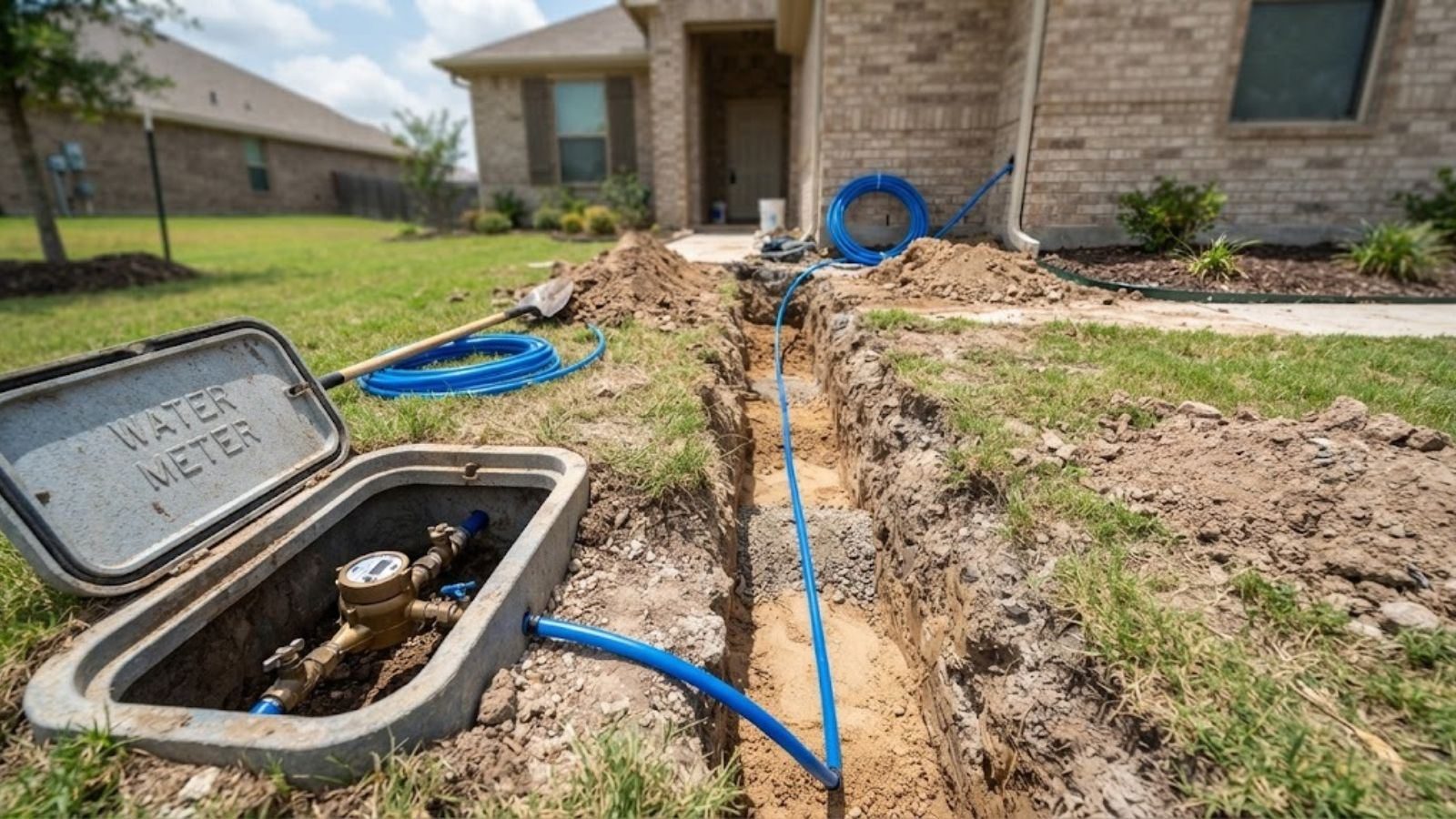
The pipe between the street and the house is the service line, and it sits outside the monitor's control. It can leak into soil with no stain inside. Telltale signs are a wet patch in the yard, soft ground by the foundation, a meter that spins with the house off, or a sudden pressure drop.
A house monitor may detect the flow but cannot repair the pipe. Repairs fall under water service line repair, which may involve excavation or trenchless methods. Treat a suspected service line leak as a priority, since it wastes water and can undermine soil.
Winter and vacation: where these devices earn their keep
A leak that runs for a day in an empty house can do real damage. Minnesota winters make that more likely, since a frozen line can split and flood a basement while the family is away. A shutoff valve set to vacation mode closes the main when you leave, which stops a burst from running for days.
Pair it with simple habits. Keep the thermostat set to a safe temperature, open cabinet doors on exterior walls during extreme cold, and ask a neighbor to check the house. The device is a backstop, not a substitute for those habits.
What drives the cost of a system
Price depends on device type, pipe size, how reachable the main is, whether an electrician is needed for power, the cost of an expansion tank, and any extra sensors. A copper main in an open basement is easy. A main hidden behind finished drywall takes longer.
Insurance companies sometimes offer a discount for shutoff devices, so ask your insurer before you buy. Do not count on it. Policies typically cover sudden water damage and not gradual leaks, and a device does not change that.
What Minnetonka homeowners should know about meters and the city
Minnetonka runs its own water utility. The City of Minnetonka plumbing permit application lists a water meter cost range of $565.55 to $1,192.22 depending on size and residential or commercial use, and says a Certificate of Occupancy for new construction waits until Public Works confirms meter installation. So the meter is part of the city's system, and a plumber should not cut or move it without checking.
For a remote meter reader or consumption data that could work alongside a monitor, ask the City of Minnetonka Public Works utilities office, which is run by the Utility Superintendent. Check with the building department whether a shutoff valve installation needs a permit, since the form says work is not to start without one. Homeowners in Eden Prairie and Plymouth should call their own utilities.
Source: City of Minnetonka plumbing permit application.Questions about this topic
No. It can close the main when a pipe bursts and flow runs, but it does not prevent freezing. Keep the heat on and insulate exposed lines.
It means cutting into the main line, which is plumbing work. In communities over 5,000, a plumbing contractor must be licensed, so use the DLI Check a License lookup.
Many have battery backup and keep the valve in its last position. Ask how your model behaves.
It might if the flow looks like a leak. Set schedules or exclusions during setup.
Only roughly. It sees flow at the main. Finding the exact leak needs a plumber with testing tools.
The permit form ties the meter to Public Works, so ask the City of Minnetonka utilities office before touching it. A valve usually goes on the house side of the meter.
Related plumbing help
If this problem is happening now, these pages cover the work and the towns the 24/7 line serves.