
Why Minnetonka basements take on water
Basement waterproofing means stopping groundwater and surface water from entering a below-grade space, or moving it out fast once it arrives. Much of Minnetonka's single-family housing was built between 1950 and 1970, and many of those homes have basements with original floors, cracks and older drain tile. So a home of that age is a good candidate for a closer look, not a reason to panic.
Minnehaha Creek runs through the city and the eastern tip of Lake Minnetonka lies within it. If your home sits near either, the soil around the footing may stay wetter, which makes a working sump pit and good drainage more important.
Symptom, likely cause, and the usual approach
Match what you see to a probable source. The approach column is where a plumber or another trade would start.
| Symptom | Likely cause | Usual approach |
|---|---|---|
| Water at the floor and wall joint. | Hydrostatic pressure, clogged or missing drain tile. | Interior drain tile into a sump pit. |
| Water through a wall crack. | Foundation crack, high soil moisture. | Crack sealing or injection by a foundation contractor. |
| Puddle under a window well. | Clogged well drain, grade slopes toward house. | Clear drain, add well cover, fix grade. |
| Damp air, musty smell, no standing water. | Humidity, dryer vent or condensation. | Dehumidifier, vent repair, insulation. |
| Water near a floor drain. | Backed-up sewer or failed sump. | Camera inspection, sump pump repair. |
Liquid water or humidity: figure that out first
Basements feel damp for two different reasons, and the fixes do not overlap. Liquid water shows up as puddles, wet carpet edges or stains that darken after rain. Humidity shows up as condensation on cold pipes, a musty smell and white mineral deposits on the wall.
A simple test is to tape a square of plastic to a bare wall for a couple of days. Moisture under the plastic comes through the wall, while moisture on top is room air. Humidity is a dehumidifier and a ventilation job, not a waterproofing one.
The main waterproofing methods
Each method treats a different path for water to enter.
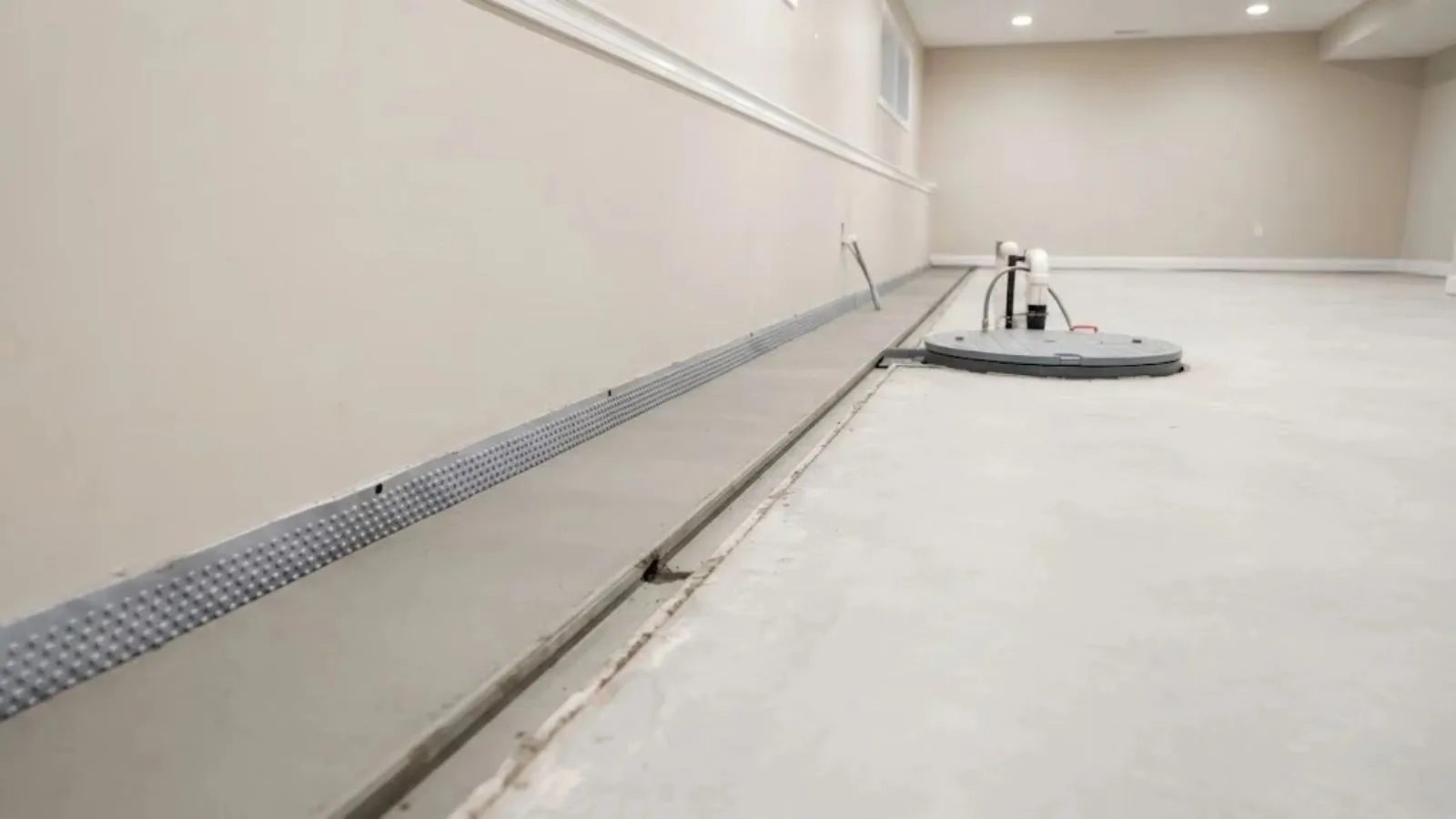
Interior drain tile
A channel is cut in the floor along the wall and filled with perforated pipe and stone. Water drains to a sump pit and out. It handles rising groundwater, not an exterior leak.
Sump pit and pump
The pit gives groundwater a place to go and the pump sends it outside. If the pump is the weak link, read about fixing a failed pump.
Exterior excavation
The soil is dug away, the wall sealed and drain tile replaced at the footing. It is the most invasive method and usually handled by a foundation or excavation contractor.
Crack sealing
Epoxy or polyurethane injection stops water through a single crack. It does not fix the pressure that forced the water there.
Window wells and gutters
A clogged well drain or a downspout dumping beside the foundation can be the whole problem. These are the cheapest fixes and the first to try.
Gutters, grading and the cheap fixes first
Before anyone digs, look outside. Downspouts should carry roof water several feet from the foundation, and the soil should slope away from the house. A clogged gutter that spills at the same corner every storm can mimic a foundation leak.
After a rain, walk the perimeter and watch where water pools. If the wet spot inside lines up with a downspout or a low spot, you may have found the source. Fix that first and see whether the basement stays dry through the next storm.
What a plumber does, and what a foundation contractor does
Plumbers handle the drainage side. That means sump pits and pumps, discharge lines, floor drains, drain tile tied to the sump, and finding out whether a sewer or supply leak is the real source. We use a drain camera and a pressure test to rule out a hidden leak or a backed-up line.
Foundation contractors handle the structure: wall cracks, exterior excavation, waterproof membranes and heavy sealing. We do not do structural foundation repair. If your problem is a bowing wall or an active crack, that work belongs with a foundation specialist, and we will tell you so.
Check for a plumbing leak before you waterproof
A wet basement is sometimes a plumbing problem. A leaking supply pipe, a failed water heater or a weeping sewer cleanout can look like groundwater. If the water appears when no rain has fallen, it may be a plumbing source.
A leak test can settle that. Watch the water meter with every fixture off, and if it moves, a pipe is leaking. Our leak detection page explains the tools we use to locate hidden pipe leaks.
How we approach a wet basement call
The visit is a diagnosis first and a quote second.
Look at the water pattern
We note where water enters, how it behaves after rain and what the floor, wall and pit look like.
Test the plumbing
We check the sump pump, discharge line and floor drains, and run a drain camera if sewer water is a possible source.
Name the cause
We tell you whether it is drainage, a leak, humidity or a structural issue that belongs with another trade.
Quote the plumbing work
You get a clear price before work starts for any plumbing we can do.
What drives basement waterproofing cost
Waterproofing jobs vary widely. These are the cost drivers.
Standard homeowners policies often exclude groundwater seepage and sump failure unless a water backup rider was added. Read your policy and call your insurer, and do not expect waterproofing itself to be covered.
Water control for homes beyond Minnetonka
The same questions apply in Hopkins and Eden Prairie. A basement in an older neighborhood often needs tile and a pit, while newer homes mostly need gutters, grading and a pump that works. If you find sewage in the water or a pump that has stopped, call the 24/7 line the same day.
Questions about basement waterproofing in Minnetonka
Partly. We handle sump pits, pumps, discharge lines, drains and finding plumbing leaks. Structural wall repair and exterior excavation belong to a foundation contractor.
Liquid water leaves puddles or stains that grow after rain. Humidity causes condensation on pipes and a musty smell without standing water.
It moves water out of a pit, but it does not stop water from entering. It works best with drain tile and good grading.
It collects water at the floor level but does not seal the crack. A foundation contractor can inject or seal the crack.
Wetter soil can raise groundwater pressure around a foundation. A working pit, tile and a battery backup are worth checking.
Ask the City of Minnetonka building department. The city's permit form says work is not to start without a permit.
Move belongings, check the pump and breaker, and call the 24/7 line. Same-day appointments are offered when available.