
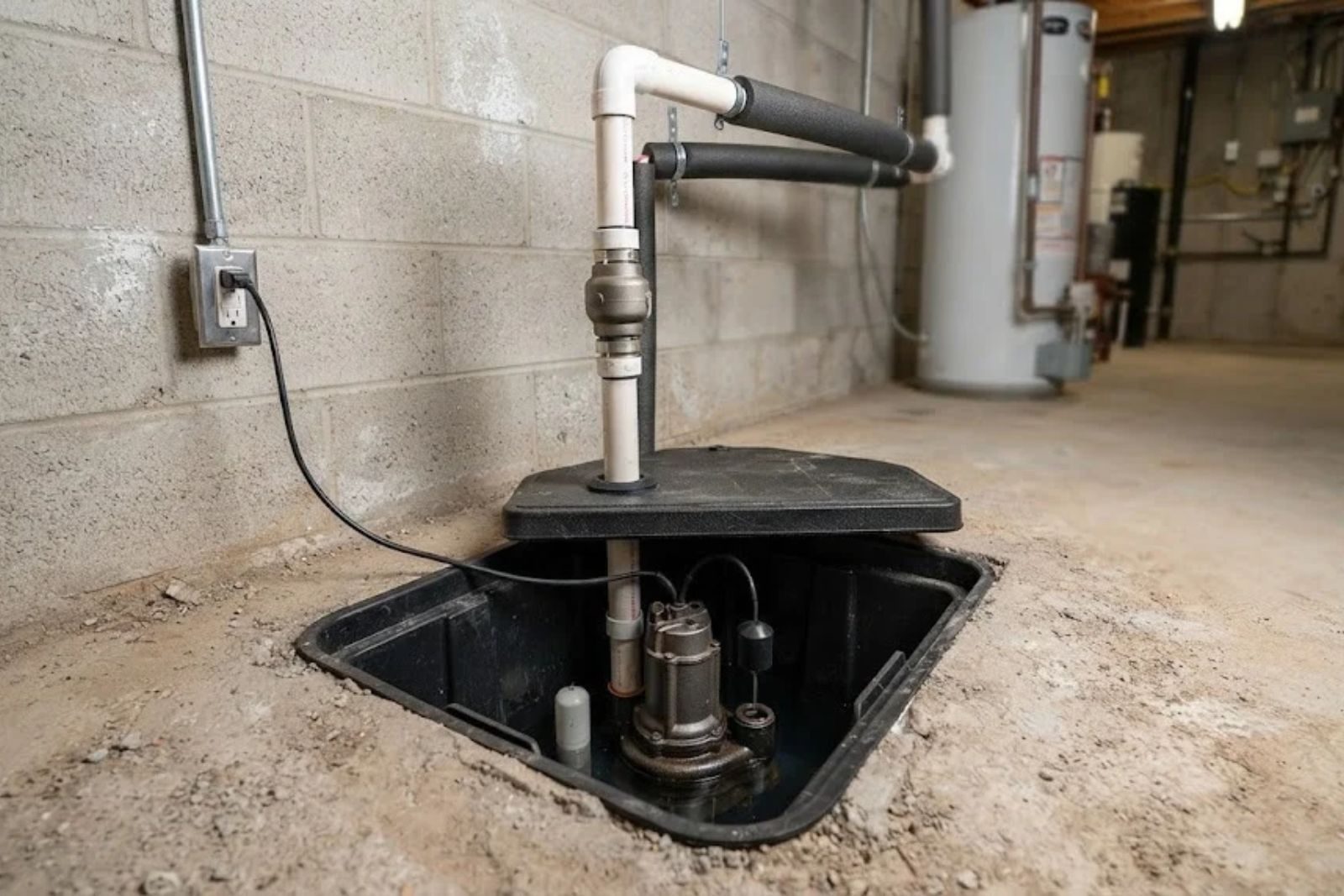
What to do when the sump pump has failed and water is rising
A silent pump with water climbing the pit is an emergency, and it does not care what time it is. Our line is open overnight and on weekends, and a plumber can come the same day when the schedule allows. A pit that fills to the lid can spill onto the floor in a short time.
Do the following while you wait. Keep it simple and stay out of any wet area where outlets or cords touch water.
- Unplug the pump only if the outlet is dry and you can reach it without stepping in water.
- Check whether the breaker tripped, and reset it once if the panel is dry.
- Move boxes, rugs and stored items off the basement floor.
- Bail the pit with a bucket if water is near the top and the floor is still dry.
- Do not run the washing machine, dishwasher or long showers, because that water may end up in the pit.
What a sump pump does in a Twin Cities basement
A sump pump sits in a pit in the basement floor, collects groundwater from drain tile around the footing, and sends it outside through a discharge line. Basements are common in Twin Cities area homes, and many of them depend on one. In Minnetonka, Minnehaha Creek runs through the city and the eastern tip of Lake Minnetonka lies inside it, so if your home sits near water, it is worth knowing what your pit is doing for you.
A pump that runs often after rain is normal. A pump that never runs, or runs nonstop in dry weather, is telling you something is off. Sump pump and drain work is plumbing under Minnesota Rules chapter 4714, and the Minnesota Department of Labor and Industry sets the licensing standards for the people who do it.
Sump pump, ejector pump and battery backup compared
The word pump covers three different jobs. Which one you have changes the repair.
| Type | Use | Notes |
|---|---|---|
| Sump pump. | Moves groundwater from the pit to outside. | Float or vertical switch, discharge line with check valve. |
| Ejector pump. | Lifts sewage from a basement bath or laundry up to the main drain. | Sealed lid, vent, heavier solids handling, call a plumber. |
| Battery backup. | Runs the pit when power fails. | Needs a charged battery and its own float, test it yearly. |
| Water-powered backup. | Uses city water pressure to push water out. | Needs adequate pressure and a place to drain. |
Sewage and groundwater do not mix. If the pit holds toilet or sink waste, treat it as an ejector job and keep people and pets away.
The usual reasons a pump quits
A pump rarely fails for a mysterious reason. These are the parts we check first.
Stuck float switch
The float can jam against the pit wall or get tangled in the cord. The pump never starts, or it runs after the water is gone.
Failed check valve
The valve on the discharge line stops water from falling back into the pit. A bad one lets the pump cycle too often and wear out.
Clogged intake or impeller
Silt, gravel and debris jam the impeller, so the motor hums but does not move water.
Frozen or blocked discharge
In Minnesota winters, the outside end of the discharge line can freeze or clog with ice. The pit fills even though the pump is running.
Power or battery problem
A tripped breaker, dead outlet or dead backup battery turns a good pump into a stationary one.
Repair or replace the pump
We test the float, check the check valve, look at the discharge line and run the pump under water before deciding. Sometimes a float switch or check valve is all the pit needs. A pump that is rusted, noisy or has been running for many years may be better replaced than repaired.
A new pump should be sized for the pit and the lift to the discharge point. A pump that is too small keeps the motor working hard, and one that is too large cycles on and off. We also look at whether the pit has a lid, a clean bottom and a dedicated outlet.
Sewage ejector pumps are a different repair
An ejector pump handles toilet, shower and laundry waste from a bath below the sewer line. It lives in a sealed, vented pit and uses a pump built to move solids. When it fails, the toilet downstairs stops flushing and sewage can back up into the basement.
Replacing one is a plumbing job, not a swap-and-forget task. The vent, the check valve and the piping all need to be right, and the old unit may have flushable wipes wrapped around the impeller. Call us rather than lifting a lid on a pit that holds waste.
Installing a new pit versus repairing the one you have
If the pump is fine but the basement still gets wet, the pit may not be catching enough water. Adding a second pit, a larger basin or new drain tile is installation work, and it often belongs with a bigger water control plan. Our page on basement waterproofing explains how a pump fits with tile, grading and sealing.
Permits and who can do the work
Permit rules differ by town. The City of Wayzata's own page says replacing a sump pump is exempt from permits only if the plumbing piping is not altered. That is Wayzata's rule, not Minnetonka's. For Minnetonka, ask the City of Minnetonka building department, because its permit form lists no exemptions.
You can check a plumber's license on the Minnesota DLI Check a License lookup. That is worth doing before anyone cuts into drain or discharge piping.
What affects sump pump repair cost
The price depends on what the pit needs. These factors move it most.
Water damage from a sump pump failure or sewer backup is often excluded unless you added a water backup endorsement. Read your policy and call your insurer.
Keep the pit working between storms
Once a year, pour a bucket of water into the pit and watch the float lift and the pump run. Check that the discharge line points away from the foundation and that the end is not buried in leaves. If the pit has a battery backup, test the battery and replace it on a schedule.
If your home is in Plymouth or Hopkins, the same checks apply. A rattling pump or a pit that never goes quiet is worth a look from leak detection if the water source is unclear.
Questions about sump pump repair in Minnetonka
Yes. The 24/7 line takes calls overnight and on weekends, and a licensed plumber can come the same day when the schedule allows. Call while the pit is still filling so we can walk you through the first steps.
Move belongings off the floor, check the breaker, and bail the pit if water is near the top. Then call the 24/7 line.
A sump pump handles groundwater and an ejector pump handles toilet and laundry waste. If the pit is sealed with a vent and a downstairs toilet is involved, it is an ejector.
A stuck float, a failed check valve or a high water table can cause it. A bad check valve lets water drain back so the pump keeps cycling.
If your basement depends on the pump, a backup helps during power outages. Test the battery and float at least once a year.
The pump sits inside, but the outside end of the discharge line can freeze or clog with ice. Keep the end clear and pointed away from the house.
Ask the City of Minnetonka building department. Minnetonka's permit form lists no exemptions, so do not assume Wayzata's rule applies.