
Why a cable keeps losing to the same clog
A drain cable has a spinning head that cuts a hole through a blockage. Water flows again, but the clog's walls remain. Grease, mineral scale and root hairs cling to the pipe, then narrow it again over a few months. That is why some homeowners call about the same backup every spring.
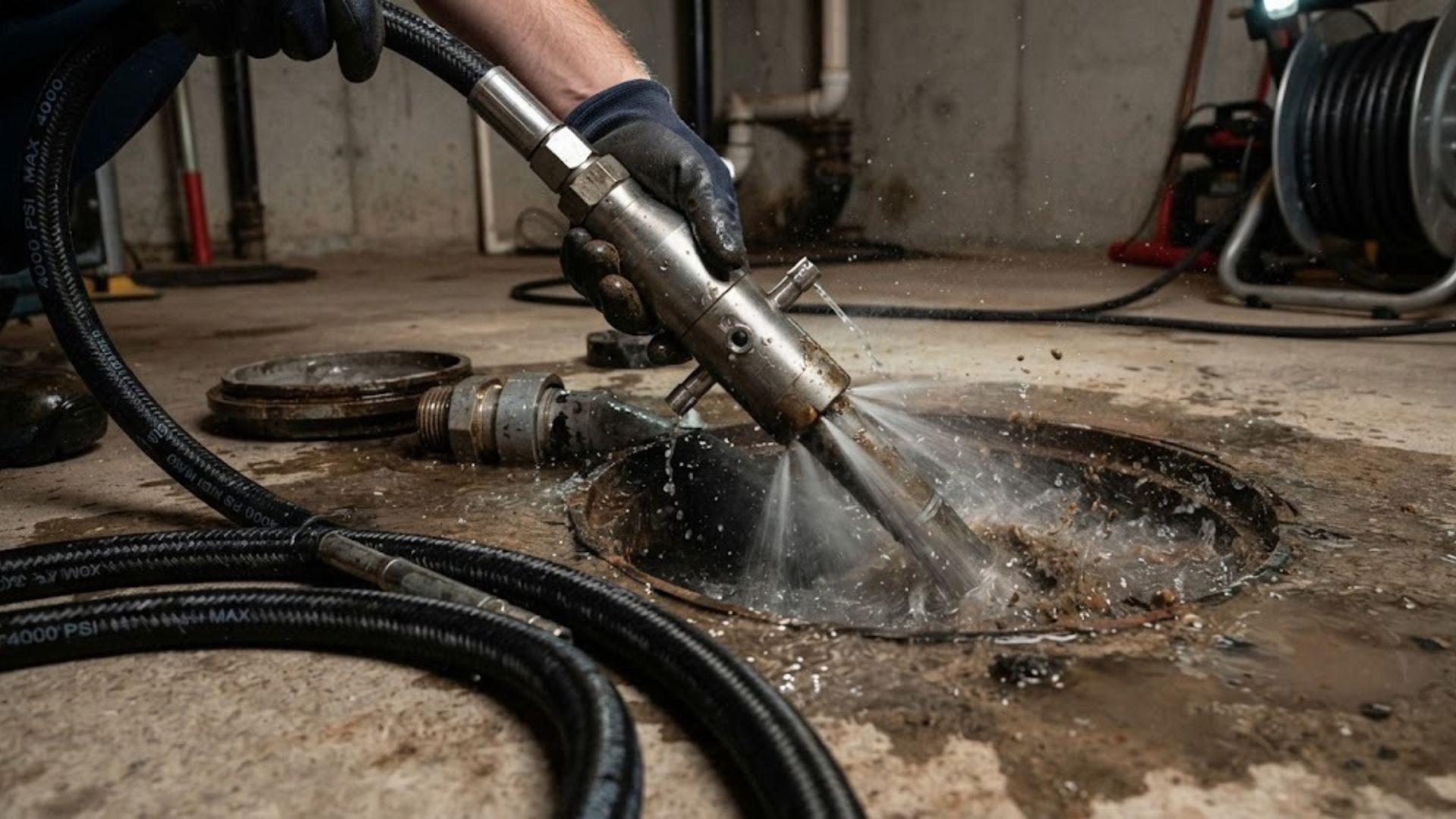
A hydro jetter uses a hose and nozzle that fire water backward and forward at high pressure. The jets strip the buildup off the pipe and flush it downstream. When the cause is a build-up of material instead of a single lodged object, jetting resets the pipe to bare walls. Our hydro jetting service is built around that pass-and-camera routine.
Any pipe repair that follows a jetting visit is made to the Minnesota Plumbing Code, Minnesota Rules chapter 4714, by a plumber who meets state licensing standards.
Signs the main line needs more than a plunger
One slow drain is a fixture problem. These point at the sewer line.
- Several fixtures drain slowly at the same time.
- The basement floor drain or lowest tub bubbles when upstairs water runs.
- A toilet gurgles when the washing machine drains.
- You have cleared the same line more than once in a year.
- A sewer smell shows up near the floor drain after rain or heavy use.
- Large trees stand over the line between the house and the street.
Cable, jetter or camera: how the choice usually goes
These tools work together, and the right order saves money.
| Situation | Best first tool | Why |
|---|---|---|
| One fixture clogged. | Hand tool or small cable. | Short run, simple blockage. |
| Repeated main-line backups. | Camera, then jetter. | See cause before cleaning. |
| Grease buildup. | Hydro jetter. | Scours instead of punching a hole. |
| Roots in clay or concrete pipe. | Cutting head, then jet. | Cut roots, then wash out debris. |
| Collapsed or offset pipe. | Camera, then repair. | Jetting cannot fix broken pipe. |
What jetting cannot do, and what to do instead
Water does not repair a pipe. If the line has dropped into a dip, a bellied section holds water, or a joint has separated, you can jet it clean today and see the same trouble later. That is the reason many plumbers run a drain camera first.
Very old, brittle pipe also deserves caution. A camera inspection tells the plumber whether the wall is sound enough for jetting pressure. A sewer camera inspection shows what the pipe actually looks like before pressure goes in.
What a jetting visit looks like
Expect a short but organized process.
Find access
The plumber locates a cleanout, usually in the basement near the main stack or outside by the foundation. If none exists, access may come through a pulled toilet or a roof vent, which takes longer.
Camera first when the cause is unclear
A small camera on a flexible rod goes in, and the monitor shows scale, roots, offsets or sagging. The camera also records the distance to each problem.
Jet in passes
The nozzle feeds in along the line, then is pulled back while spraying so debris moves toward the city main. Heavy sections get several passes. Roots are cut first if present.
Confirm with a second look
A final camera pass shows the clean wall and any damage that was hidden. Good results come with a list of what the camera saw, not just a statement that the line flows.
Prep that helps the visit go faster
Clear a path to the cleanout and move storage away from it. Know where your main water shutoff is, because a line this size makes noise and spray. If there is a floor drain nearby, clear things off the floor.
Do not pour chemical drain cleaner into a backed-up main before the visit. Caustic liquid sits in the pipe, and it can splash on the plumber's skin and eyes. Tell the dispatcher what you used.
If the backup has already reached the floor, shut off the washer and dishwasher, keep showers off, and keep children and pets out of the wet area. Sewage water carries bacteria, so wear gloves and boots when you move belongings, and bleach hard surfaces only after the line is open.
What goes into the pipe that causes the next clog
Kitchen grease is the biggest repeat offender. It leaves the sink as a liquid, cools in the pipe and forms a waxy coating that traps wipes, coffee grounds and food scraps. Flushable wipes are another culprit, since they do not break down as toilet paper does.
Laundry lint, hair and mineral scale add up too. Changing habits helps as much as any tool. Wipe pans before washing, use a sink strainer, and put wipes in the trash. Jetting resets the pipe, but habits decide how long it stays clean.
When cleaning is not the end of the story
After a camera pass, most lines land in one of three groups. A clean pipe with light wear needs nothing more than habit changes. A pipe with roots or a rough joint needs periodic cleaning, or a spot repair at the joint. A pipe that is cracked, offset or collapsed needs repair or replacement, and jetting only delays that.
Ask for the recording and the distance markers. They let you compare quotes honestly, and they show a future buyer or inspector what the line looked like. A plumber who is licensed and insured should be glad to show you the video before talking about big repairs. You can confirm a plumber's license at the Minnesota DLI Check a License lookup.
What changes the price of jetting
Price follows access, length and condition. A line with a clean outdoor cleanout is quicker than one reached through a toilet. A long run with heavy roots needs more passes. If a camera is added, that is its own step. Equipment sizes also matter, since a bigger line takes a larger nozzle and more water volume.
Expect a clear price before work starts, and expect an honest statement when jetting will not fix the cause. Some backups end up needing spot repair or relining, and the camera is how that conversation gets facts instead of guesses.
What Hopkins and Minnetonka homeowners should know about older sewer lines
The City of Hopkins housing plan says approximately 60 percent of owner-occupied units are at least 60 years old. It adds that the vast majority of housing is at least 50 years old. Older houses often have clay or cast iron building sewers, which collect roots and scale at joints, so a camera look is the first step before any jetting in a home of that age.
Roots and scale are a normal reason to call in these homes. If your line is original to the house, a camera view is better than guessing. Hopkins homeowners and those in Excelsior, where Victorian-era homes are part of the old core, should ask the local utility about the pipe from the street.
Source: City of Hopkins housing plan.Questions about this topic
It can be, if the pipe wall is sound. That is why a camera look comes first on older lines.
Only when a camera or repeated backups show buildup. Many lines never need it on a schedule.
Ask for a camera inspection before closing on an older house. The view shows whether jetting, repair or nothing is needed.
It clears small roots and washes debris away. Heavy roots are cut first, and roots return unless the pipe is repaired.
Pressure that is set to the pipe and a skilled operator keep the risk low. Fragile or broken pipe should be camera-checked first.
Snaking opens a channel through the clog. Jetting scours the entire pipe wall, so it removes the layer that causes repeat clogs.
Often yes. With homes at least 50 years old, a camera check shows pipe condition before pressure goes in.
Related plumbing help
If this problem is happening now, these pages cover the work and the towns the 24/7 line serves.