
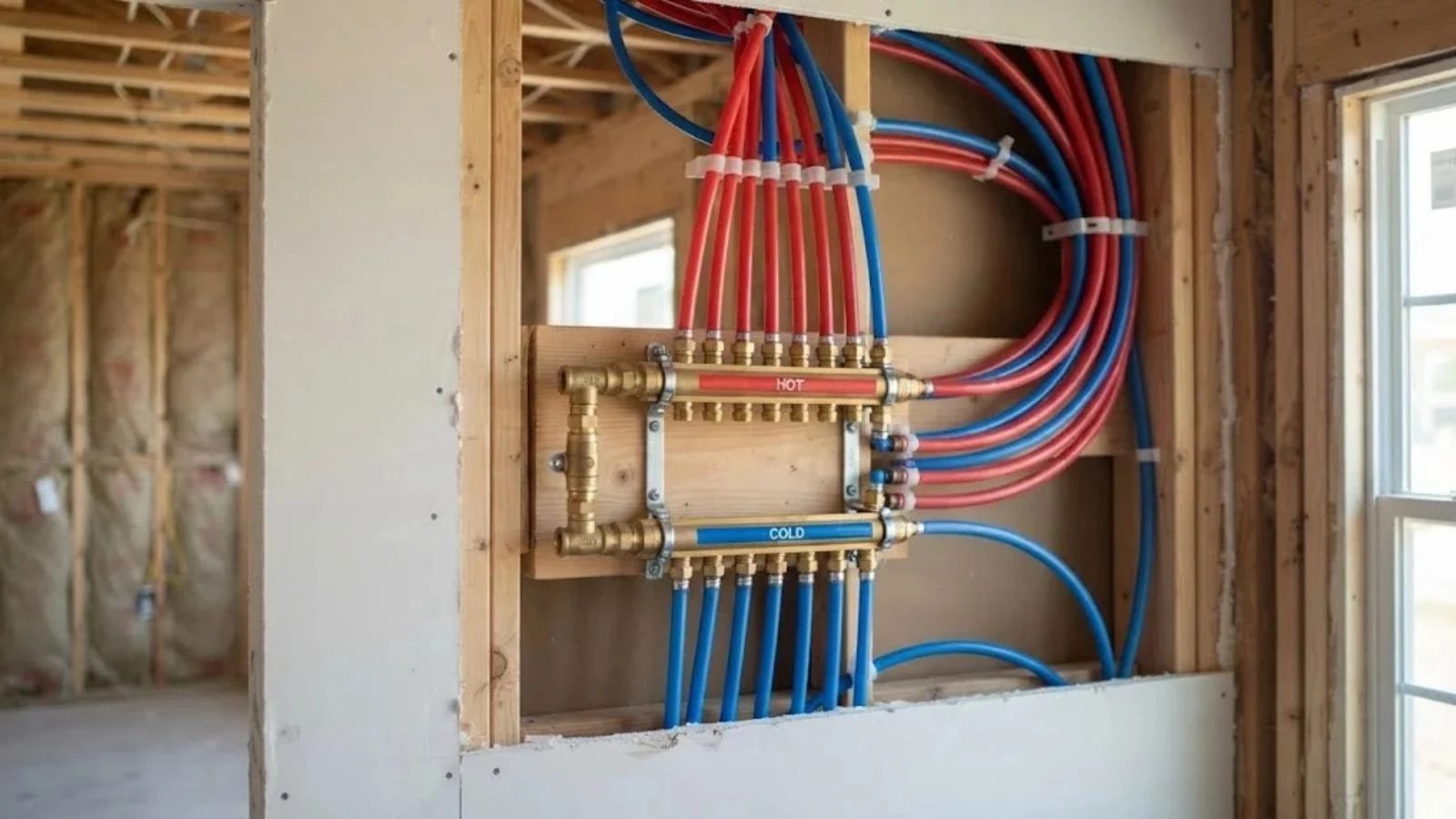
What repiping means for your house
Repiping is the replacement of the water supply lines that run through your walls, floors and ceilings. New pipe is routed to every fixture, so the old pipe can be capped and left or removed. It is the answer when patching leaks stops working.
It does not mean replacing your drains or the line from the street. Those are separate jobs. Supply pipe carries pressurized fresh water, and that is the system repiping addresses. A repipe is permitted work in most cities, and the pipe, fittings and pressure rules come from the Minnesota Plumbing Code, Minnesota Rules chapter 4714. The pressure standards sit in section 4714.0608.
Signs your supply pipes are wearing out
Rusty or brown water from the taps, especially after the water sat overnight, is a common first sign. Steady loss of pressure across the house is another, because corrosion narrows the inside of old steel pipe.
Pinhole leaks, green crust on copper joints, stains along pipe runs and repeat repairs in different spots also point toward replacement. One leak can be a fluke. Three in a few years suggest the whole run is aging out. A leak detection visit can confirm whether the problem is local or spread through the system.
Why age matters in Minnetonka
About 53.4% of Minnetonka homes were built before 1980, and much of the single-family stock dates from 1950 to 1970. Houses from that era may still have original supply pipes, which means older steel or early copper work and aging joints. If your home is in that group, an inspection of exposed pipe in the basement is a smart first look, and a camera can inspect drains separately.
Pipe materials compared
The material you pick shapes the job. Here is how the common options compare.
| Material | How to think about lifespan | Pros and cons |
|---|---|---|
| Copper. | Long service life when water chemistry is kind. | Durable and familiar. Higher material cost, more labor and soldering or press joints. |
| PEX. | Newer and well suited to residential use. | Flexible, fewer fittings and faster to run. Not for sun exposure. |
| Galvanized steel. | Usually the pipe being removed. | Rust builds inside and narrows flow. Not used for new installs. |
| CPVC. | Moderate use in some homes. | Easy to join. Can turn brittle with age and heat. |
Ask which material your plumber recommends and why. The answer should come with a reason tied to your house, not a default.
Galvanized pipe and other older materials
Galvanized steel was common in older homes. Its zinc coating wears away, and then the steel rusts from the inside out. The pipe narrows, pressure falls and the water can turn brown or orange.
You may also run into polybutylene, a gray plastic pipe used in some houses of past decades. We mention it only as a material class to watch for. If you find unfamiliar plastic pipe, have a plumber identify it. Mixed systems are common, with a bit of copper added to a steel line, and those junctions are weak points.
Copper or PEX for your home
Copper is time-tested and handles heat well, and many people like it for exposed runs. The labor is higher, and soldered or press-fit joints take time to make in tight spots.
PEX bends around corners and runs in long single lengths, so it uses fewer fittings and often needs smaller openings in drywall. It does not like sunlight, and it needs proper support and protection. Neither material is right for every home. A short call with a plumber about your layout settles it quickly.
Whole-house or partial repipe
A whole-house repipe replaces everything from the main to the last fixture. It suits houses with widespread corrosion or repeated failures, and it avoids coming back every year.
A partial repipe replaces one branch, such as a kitchen and bath cluster or a single floor. It costs less, and it works well when the rest of the pipe is in good shape. The risk is that old and new pipe meet at a joint, which can become the next weak spot. We tell you honestly which approach fits what we find.
How a repipe goes from start to finish
A repipe is organized work, not chaos. The steps below are typical.
Walk-through and plan
We trace your existing runs, find the main and plan the new route to each fixture.
Permit and scheduling
Ask the City of Minnetonka building department whether permits apply. The city's form says work is not to start without one.
Access and new lines
Small openings in drywall or ceilings let the new pipe through. Basements and open framing reduce the cutting.
Connect, test and restore
Fixtures are reconnected, the system is pressure tested and the water comes back on. Drywall patching is arranged separately.
Drywall, water shutoff and what to expect at home
Some drywall is opened in most repipes. How much depends on the layout. A basement with exposed joists lets the plumber run most pipe without cuts, while a finished upper floor needs holes at floor and ceiling lines.
Water is off during the work, so plan for it. We do not promise how many days the water will be off, because that depends on house size and layout. Ask your plumber for a plan that keeps at least one bathroom or the kitchen working when possible.
Patching and painting are not part of the plumbing. Many people hire a handyman or painter afterward.
What affects the price of a repipe
Repiping is priced by the house. You hear a clear price before work starts.
Insurance rarely pays to replace pipes that are simply old. A sudden burst that damages the house may be covered, but wear and corrosion usually are not. Read your policy and call your insurer.
Other work that often pairs with a repipe
A repipe is a good time to look at related items. A new shutoff valve at each fixture, a pressure regulator and an expansion tank near the water heater can all be added while the walls are open. If hard water is wearing out fixtures, ask us about water softener installation, though we make no claim about the hardness of your tap water until you test it.
If a pipe has already burst, burst pipe repair gets you through the immediate problem. We serve Minnetonka and nearby towns such as Hopkins and Wayzata.
You can check any plumber's licence at the Minnesota DLI Check a License lookup.
Questions about repiping in Minnetonka
Rusty water, falling pressure across the house, pinhole leaks and repeat repairs are the signs. A plumber can inspect exposed pipe and test pressure to tell.
It is a material class found in some older homes. If you see gray plastic pipe, have a plumber identify it and talk through your options.
Copper is durable and traditional. PEX is flexible and uses fewer fittings. The best choice depends on your layout and budget.
Yes, for part of the project. Duration depends on the house and the approach, so ask your plumber for a plan.
Ask the City of Minnetonka building department. The city's form states that work is not to start without a permit.
Yes. A partial repipe replaces one branch or floor. We will tell you if the remaining old pipe is likely to cause trouble.
Shut off the main and call the 24/7 line for emergency repair first. Repiping can be planned after the leak is stopped.