
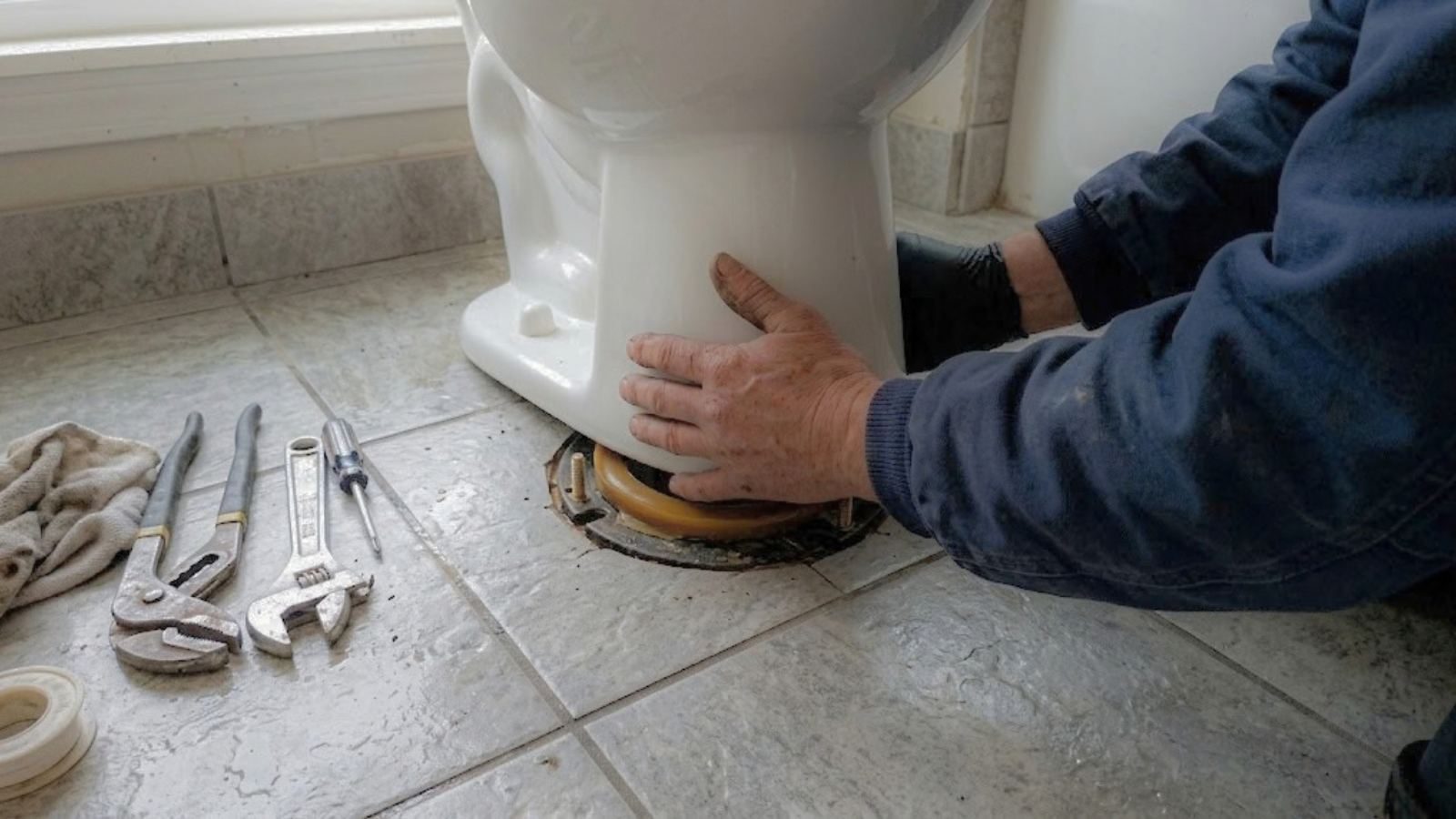
What the flange does and how you know it broke
The flange is the ring that bolts the toilet to the floor and connects its outlet to the drain. A wax ring seals the gap between the two. When the flange cracks, the closet bolts lose their grip, the toilet starts to rock, and the wax seal breaks. Water or sewer gas then escapes at the base.
Typical clues are a toilet that moves when you sit, a damp ring on the floor after flushing, a faint sewer smell, or a floor that feels soft near the bowl. The soft floor is the one to take seriously. Slow leaks rot subfloor, and no repair ring will help if the wood below will not hold screws.
Closet flange work follows the Minnesota Plumbing Code, Minnesota Rules chapter 4714, and a new fixture connection may need a permit, so check your city's standards.
Which repair fits which break
Pull the toilet and look before you buy parts. The break sets the fix.
| What you find | Likely fix | Who handles it |
|---|---|---|
| Cracked top ring, pipe intact. | Stainless repair ring over the old flange. | Capable DIYer. |
| Flange sits below finished floor. | Extender ring and thicker wax. | Capable DIYer. |
| Flange ears snapped off. | Repair ring or spanner flange. | DIYer or plumber. |
| Corroded cast iron flange. | Replace flange or section of pipe. | Licensed plumber. |
| Soft or black subfloor. | Rebuild floor, then flange. | Plumber, possibly carpenter. |
Signs the floor under the toilet is already damaged
Check these before you spend money on a ring. They decide whether a flange repair can hold.
- A screwdriver sinks into the wood beside the flange with little pressure.
- The floor dips or springs when you stand next to the bowl.
- Vinyl or tile near the base is stained, cupped or lifting.
- The ceiling below, or a basement joist, shows a brown stain.
- The toilet has leaked a little after every flush for months.
- Mold smell at the base that returns after cleaning.
A careful DIY repair when the pipe below is sound
This applies only to a toilet on a first-floor or basement slab that is stable, not a bathroom you suspect has water damage.
Shut off, drain and lift
Close the supply valve, flush, and sponge out the tank and bowl. Disconnect the supply line and remove the nuts on the closet bolts. A toilet is heavy, so use two people and set it on a towel.
Clean and inspect
Scrape off old wax, stuff a rag in the pipe to block sewer gas, and check the ring for cracks, rust and soft wood. Probe nearby subfloor with a screwdriver. If it sinks in, stop.
Install the repair ring
A stainless ring screws into the subfloor and sits over the broken flange. Use stainless screws that reach solid wood. A properly fitted ring should sit flat and tight against the floor.
Reset with a new wax ring
Pull the rag, set new closet bolts, and lower the toilet straight down without twisting. Press down evenly, snug the nuts alternately, and add a bead of caulk if you like. Test with several flushes.
When to stop and call a plumber
If you find a cast iron pipe flaking apart, a drain lower than expected, or wood that crumbles, stop. These jobs mean cutting into the drain line or rebuilding the floor. Plumbing contractors in Minnesota communities over 5,000 must be licensed, and you can verify one at the DLI Check a License lookup.
A toilet that keeps leaking after a fresh wax ring may also have a drain problem. A slow drain or a gurgle after flushing points to a blockage downstream, and a toilet repair visit can sort out the fixture and the line in one trip.
Parts and tools worth having on hand
Buy a stainless repair ring or a spanner flange sized to your drain. Most homes use a four-inch pipe. You will also want new closet bolts, a wax ring with a plastic horn only if it suits your setup, stainless screws, a putty knife, and a cheap pry bar for stuck bolts. A wet vac helps with the last cup of water in the bowl.
Have an extender ring ready if the flange sits below the floor. It is a small plastic part that saves a second trip. Wear gloves. A toilet outlet is not a place for bare hands.
Why a flange fails on an older bathroom
Flanges crack from age and from a toilet that was never anchored well. Plastic flanges become brittle, brass bolts snap, and cast iron rusts at the ring. A bathroom retiled over the original floor is a special case, because the added tile can lift the floor above the flange so the seal never sits properly.
A wobble that is ignored becomes a leak, and a leak becomes a subfloor repair. Fixing the flange within a few weeks of the first rocking is much cheaper than fixing the damage that follows.
Testing the repair before you walk away
Flush five or six times and watch the base with a dry paper towel pressed around it. Check the ceiling or basement below for a drip. Rock the bowl with your hands. Any movement means the ring is not seated or the bolts are not tight, and the seal will fail again.
Come back the next morning and look again. A slow seep often shows up only after the wax settles. If the toilet still moves, or the smell returns, a plumber can check for a cracked pipe below the flange with a drain camera.
What changes the price of the repair
A flange fix costs more when the floor is damaged, when the drain pipe is cast iron that must be cut, when access is cramped, or when tile has to come up. A quick ring-and-wax repair is the small end. A rebuilt subfloor with a new closet flange and fresh finish is the large end.
If a bathroom is being redone, a plumbing installation visit can reset the flange at the right height before the new floor goes in, saving a second teardown later.
What Minnetonka homeowners should know about permits for toilet work
Rules differ across the lake. The City of Wayzata's page says it will not require permits, testing and inspection for plumbing fixture replacements, including toilets, only if the work does not alter the plumbing piping systems. Replacing the flange and drain pipe changes piping, so that exemption may not apply.
The City of Minnetonka plumbing permit application says work is not to start without a permit and lists no exemptions. So ask the City of Minnetonka building department before cutting into drain pipe. Homeowners doing their own work must own and occupy the home, which the form calls homestead. In Wayzata and Hopkins, contact the local office.
Source: City of Wayzata permit page and City of Minnetonka plumbing permit application.Questions about this topic
It is a stopgap at best. A thick wax ring will not hold a rocking toilet in place, so the seal fails again.
It should sit on top of the finished floor, or level with it, so the wax ring can compress. A flange below the floor needs an extender.
The wax seal is not tight or the toilet is not seated flat. Pull it, check the surface and reset it.
A simple ring over a sound pipe is often a morning's job. Rotted subfloor or cast iron adds work.
Usually not. The flange is separate from the toilet, and a good toilet can be reset.
Sewer gas smells bad, and large amounts are not safe. Ventilate, and call a plumber if the smell persists or a drain is blocked.
No. Wayzata states a fixture replacement exemption when piping is unchanged, while Minnetonka's form lists none. Ask each city's building department.
Related plumbing help
If this problem is happening now, these pages cover the work and the towns the 24/7 line serves.