
The short definition, and the longer one
Waterproofing is a system, not a coating. Water in a basement comes from rain soaking the soil, a high water table, or surface runoff pooling against the foundation. The waterproofing job is to control that water by sealing the points it enters, collecting what gets through, and pumping it outside.
A bucket of paint on the wall is dampproofing at best. Real waterproofing combines a path for water (drain tile), a way out (sump pit and pump or gravity outlet) and sealing where leaks start (cracks, wall-floor joint, window wells). Each piece solves a different failure. Interior drain and sump work is plumbing under Minnesota Rules chapter 4714, the Minnesota Plumbing Code, so ask your city which standards apply to your project.
The main methods side by side
Pick the method by where the water enters, not by what looks easiest.
| Method | What it does | Best fit |
|---|---|---|
| Crack injection. | Seals a single crack with epoxy or polyurethane. | One leaking crack, otherwise dry. |
| Interior drain tile plus sump. | Collects water at the footing and pumps it out. | Seepage at the wall-floor joint. |
| Sump pump alone. | Lowers water in a pit and discharges outside. | Rising groundwater, existing pit. |
| Exterior excavation and membrane. | Digs to the footing, seals the wall, adds drain. | Wall failure or heavy hydrostatic pressure. |
| Grading and gutter fixes. | Directs surface water away from the house. | Water after rain but not from below. |
How an interior system moves water
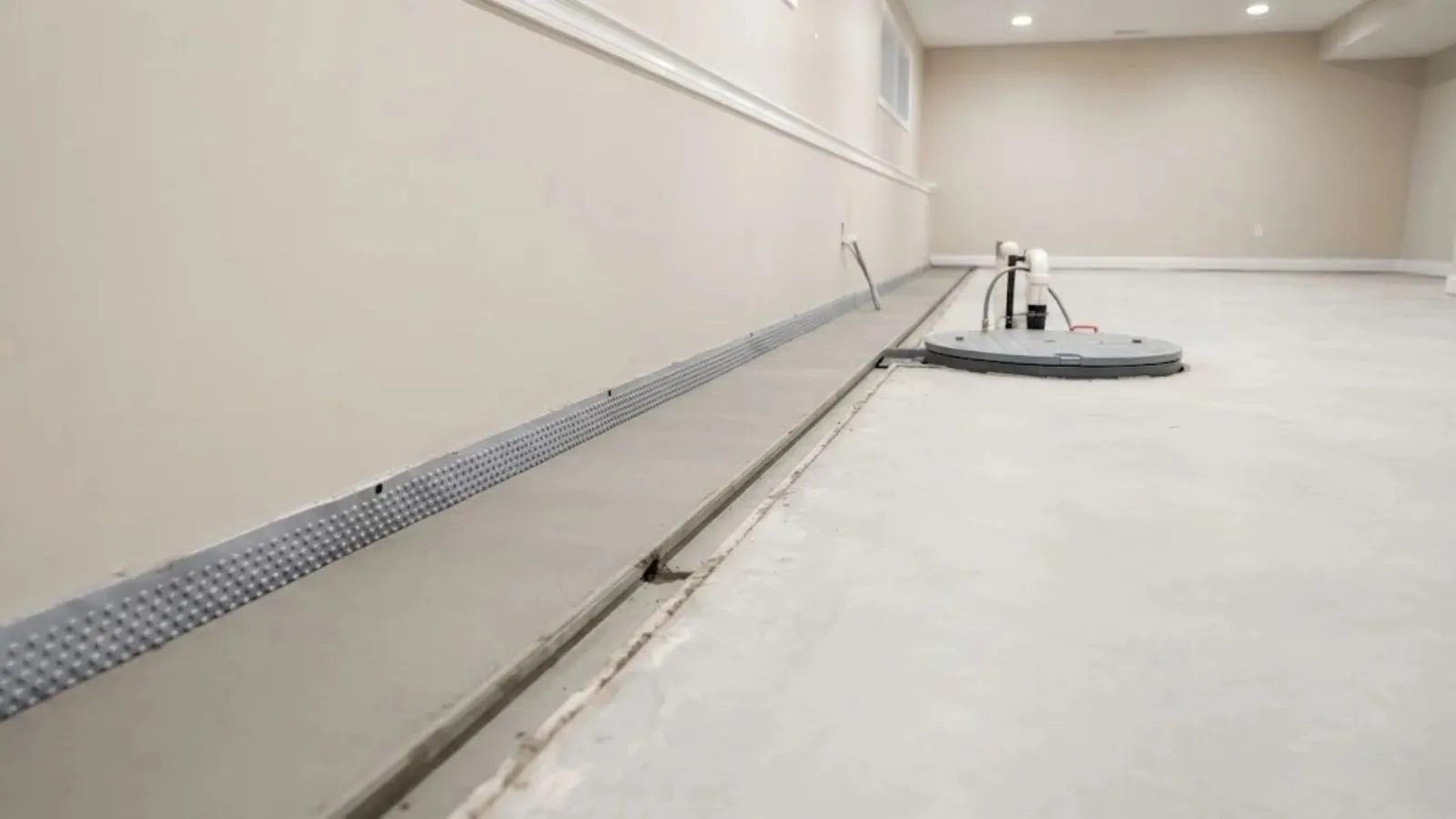
Perforated drain tile runs along the footing inside or outside the foundation, set in gravel. Water that rises to the footing level drops into the pipe and flows to the sump pit, where a float switch starts the pump. The pump pushes it through a discharge line and a check valve to the outdoors.
Every part of that chain must work for the system to work. A clogged tile, a stuck float, a failed check valve or a frozen outlet each lets water back into the basement. Maintenance is mostly testing: pour a bucket of water into the pit twice a year and watch the pump cycle.
Where water actually gets in
A basement leak points to a cause. These are the usual entry points.
The wall-floor joint
Where the slab meets the footing there is a gap by design. Under pressure, water seeps through, which is why wetness often appears along the base of the wall.
Cracks in the wall or slab
Settling and freeze-thaw cycles open hairline cracks. A crack that weeps after rain is a direct path from the soil.
Window wells and floor drains
A clogged window well fills and leaks at the frame. A floor drain tied to a failing line can push water up.
Pipes and penetrations
Where a pipe passes through the wall, the seal can fail. A plumbing leak can also be mistaken for groundwater.
How a contractor decides what you need
A good diagnosis starts before any digging.
Read the water pattern
Wet along one wall points to grading or a crack. Wet along the whole perimeter points to the wall-floor joint or high groundwater. A damp stain in one corner often means a downspout nearby.
Check the outside
Gutters, downspout extensions and soil slope around the house cause more wet basements than people expect. If water pools next to the foundation, fix that first.
Test the equipment
Look at the sump pit, the pump, the float and the discharge line. A pump that sticks or a discharge that ends near the wall explains many flooded basements. This is where sump pump repair fits.
Choose the least invasive system that works
Seal a crack before you cut a slab. Fix grading before you dig a trench. Add interior drainage only where water keeps coming. This is the approach behind basement waterproofing done properly.
What waterproofing does not fix
A horizontal crack, a bowing wall or a stair-step crack in block can be a structural problem, and sealing it will not stop the movement. Ask a structural engineer. Plumbers cover water control. Also do not assume a wet basement is groundwater. A leaking supply line or a failed water heater can look the same. Check your water meter with every fixture off.
What Minnetonka homeowners should know about the creek, the lake and older basements
The eastern tip of Lake Minnetonka lies inside the city, and Minnehaha Creek, the lake's outlet, runs through it. Homes near the lake and creek can sit over higher groundwater after wet seasons, so ask a pro about a backup pump before you finish a basement near the water.
The city's housing plan says much of its single-family stock was built between 1950 and 1970. Basements from those decades often have original poured or block walls and older floor drains, so the first step is a camera look at the drain and a check of the wall joint. If you are unsure, ask the City of Minnetonka building department about permit needs.
Source: City of Minnetonka housing plan.Signs your basement is asking for help
- A musty smell that returns after you air out the room.
- White, chalky mineral deposits on the wall, known as efflorescence.
- Damp carpet or stained drywall along the base of an exterior wall.
- A sump pump that runs constantly or never runs when the pit is full.
- Water pooling at a window well or along the foundation after rain.
- Peeling paint or bubbling on the lower wall.
What this means for Excelsior and Plymouth homes
Excelsior plumbers work with homes on the south shore, where Victorian-era stock may have older foundation walls that behave differently from modern poured concrete. A flooded basement there deserves an inspection before any sealing starts.
Plymouth grew heavily before 2000, so many Plymouth homes have sump pumps from those decades, and a pump that old is near the end of its life. Test it by lifting the float, and plan a replacement if it hesitates.
When it is an emergency
If water is rising in a finished basement, the electrical panel is wet, or the pump has failed in a storm, call the 24/7 line. While you wait, stay out of standing water near outlets, shut off power at the panel only from a dry spot, and move belongings to higher ground. Many policies cover sudden burst-pipe damage but not groundwater seepage or gradual leaks, so read your policy and call your insurer.
Questions about this topic
Dampproofing is a thin coating that slows moisture through the wall. Waterproofing is a system that controls liquid water with membranes, drains and pumps. A coating alone cannot handle water under pressure.
Yes. The drain tile collects water and the pump removes it. Without a working pump, an interior drain system has nowhere to send what it collects.
Interior drain tile, sealing and a sump handle most seepage and are less disruptive than digging. They manage water that has already reached the footing. Exterior work stops it earlier but costs far more in labor.
Not for long. Sealer paint can hold back mild dampness, but water under pressure pushes it off. Fix the water source first.
Turn off every fixture and check the water meter. If it still moves, the leak is plumbing. If the dial is still and the wall is wet after rain, the source is groundwater or grading.
Possibly. Minnehaha Creek and the lake's eastern tip lie within the city, and groundwater near them can rise in wet seasons. Ask the City of Minnetonka building department or a pro about your lot.
Related plumbing help
If this problem is happening now, these pages cover the work and the towns the 24/7 line serves.